Layer by Layer, Story by Story
A rising force in Canadian contemporary art
In the ever-evolving world of contemporary Canadian art, few voices feel as simultaneously fresh and introspective as that of Anastasia, the Edmonton-based visual artist behind the name TSEV (ЦEV). With a growing body of symbolic, expressive work rooted in themes of colour, control, and emotional duality, TSEV is quickly establishing herself as a compelling figure in the national arts scene. Her creative practice bridges technical precision with intuitive freedom—an approach reflected not only in her choice of materials but in the stories her paintings quietly tell.
Balancing a demanding career in a finance-adjacent field while building her presence as a full-time artist, Anastasia brings both discipline and playfulness to her work. From deeply personal portraits to vivid abstracts, her pieces resonate with a thoughtful energy that invites viewers to reflect on beauty, identity, and inner tension.
TorontoPages spoke with TSEV to learn more about her artistic evolution, creative rituals, business ambitions, and the influences—both cultural and familial—that shape her unique visual language.
Please introduce yourself to our readers.
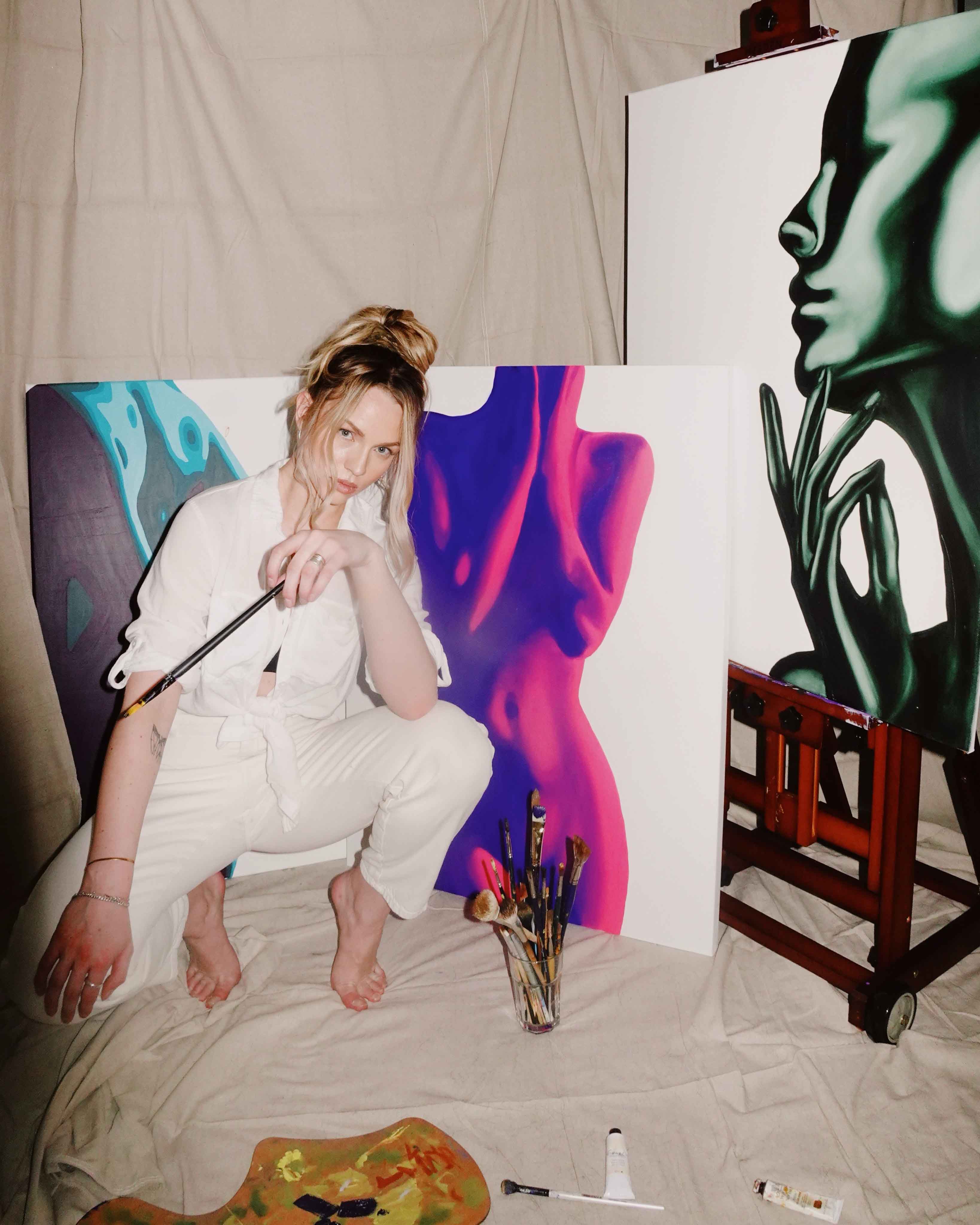
Hi, I’m Anastasia! I am a Canadian visual artist working under the name Tsev. I currently balance my art practice with a fast-paced day job in a finance-adjacent field, but I’m working toward making art my full-time focus. My work is deeply personal, a little playful, and always rooted in the tension between chaos and control.
Your professional name is written as “ЦEV (pronounced Tsev)”. Could you tell us how you chose this name and what it represents in your work?
Like many artists, I wanted some separation between my personal life and my work, but no alias felt quite right. “Tsev” comes from the last four letters of my (very long) last name, and after weeks of brainstorming, it stood out instantly. It felt like me. Instead of creating a new persona, I was choosing a name that was already part of who I am. The logo uses the Russian letter “ц” (pronounced “ts”), paired with the English “V”—a small nod to my Russian and Canadian identity coming together.
What first inspired you to pursue art, and can you describe how your journey as an artist began?
I grew up watching my older sister Maria (@ria.kae.art) paint and draw with ease, and like any little sister, I wanted to be just like her. Drawing beside her and doodling through class planted the roots of my artistic journey. Years later, we both found renewed inspiration in our cousin Polina (@pollyalmond)—a lawyer, mother, and entrepreneur who not only makes time for her creativity, but has become a successful artist and poet in her own right. Watching her fully embrace her artistry made us realize: if she can do it, so can we.
That spark turned into a fire when my sister-in-law Jill gave me a set of markers for Christmas and asked for a painting. That small gesture reignited a passion I had neglected for nearly a decade. Since then, I’ve been creating in every spare moment, and now, just six months later, I’m painting in ways I never thought I was capable of.
How would you describe the main themes or subjects you explore in your artwork, and what draws you to these themes?
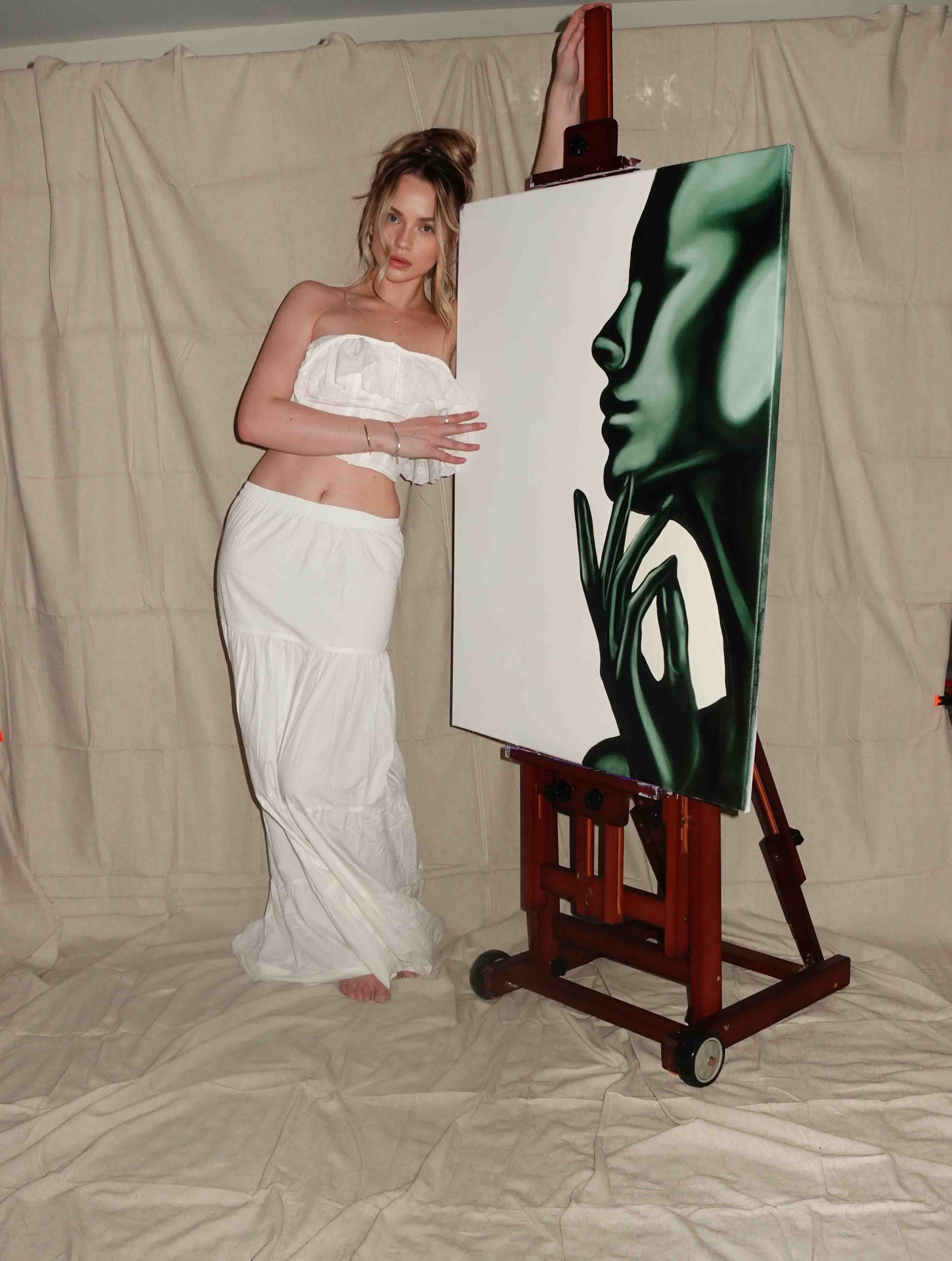
I love to create symbolic pieces using vivid palettes, finding balance between boldness and minimalism. I see color and form as sacred—a reflection of God’s original artistry. My work is an ode to both: the boldness of the colors He created and the forms He shaped. In a world obsessed with neutral tones and minimal distractions, I choose to celebrate richness, depth, and the beauty of figures and color. As my collection evolves, I plan to honor other expressions of beauty in the same spirit, from animals to food and beyond.
How has your artistic style evolved over time, and what factors have contributed to the development of your approach?
My work has evolved dramatically over the past six months. I began with acrylics, which dry quickly, making me hesitant to blend. My early style was flat and illustrative, leaning toward a pop art or comic aesthetic. I still love those pieces, but everything shifted the moment I tried oil paint.
Oils allowed me to blend more intuitively and manipulate the paint with freedom. Mistakes became easier to fix, and the process felt immersive. Switching mediums gave me the confidence to explore and develop new techniques. Now, my work has more realism and depth, and I feel I’m finally tapping into my full potential.
What materials and mediums do you primarily work with, and how do they influence the outcome of your pieces?
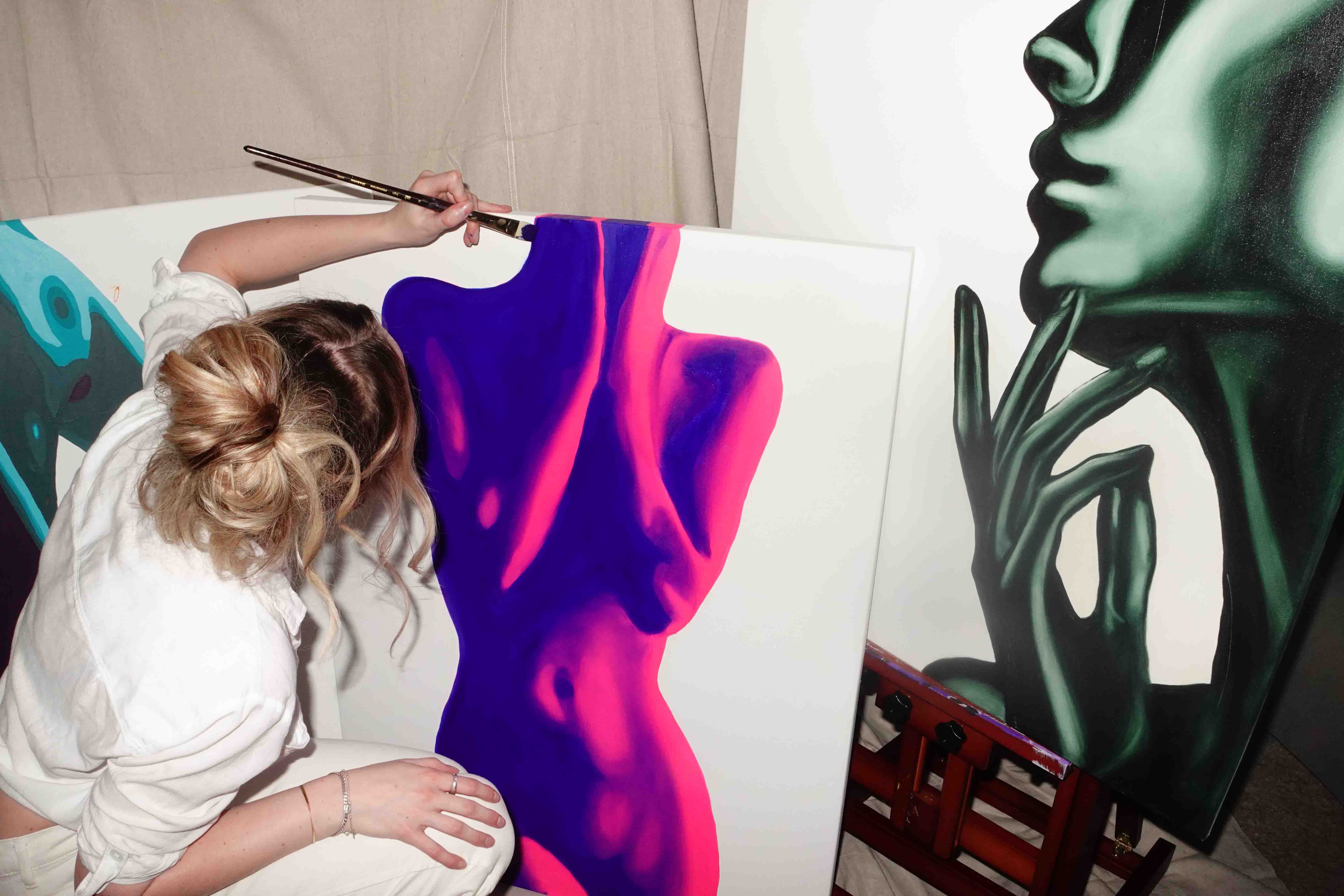
I mostly work with oil paints now, but my love for acrylics hasn’t gone anywhere. Once I started combining the two, I realized they’re the perfect power couple. I often use acrylics for underpainting—it’s a huge time-saver since they dry quickly, and it lets me create a bold, vivid base for the oil layers that follow.
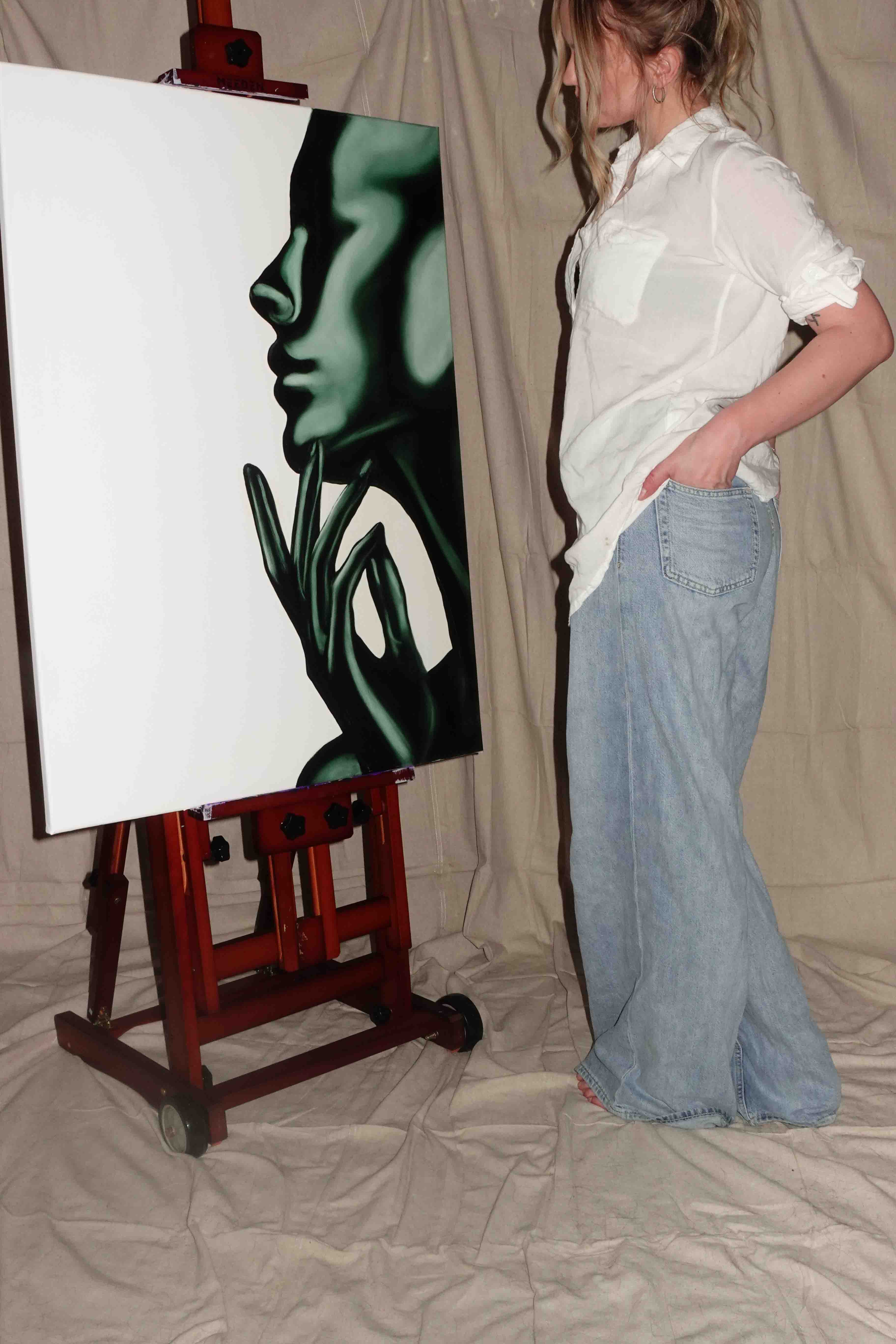
With oils, I prefer painting alla prima (wet-on-wet), but I’ve also been experimenting with techniques like glazing, using only linseed oil as my mixing medium. This helps me create dimension in my work.
Can you walk us through your creative process from the initial idea to the completed work?
I’m constantly collecting ideas—in my head, in my notes, everywhere. I have more concepts than time and often start new paintings before finishing others, just to capture the excitement of a fresh idea. My brain is always scanning for inspiration—whether from conversations, magazines, or social media.
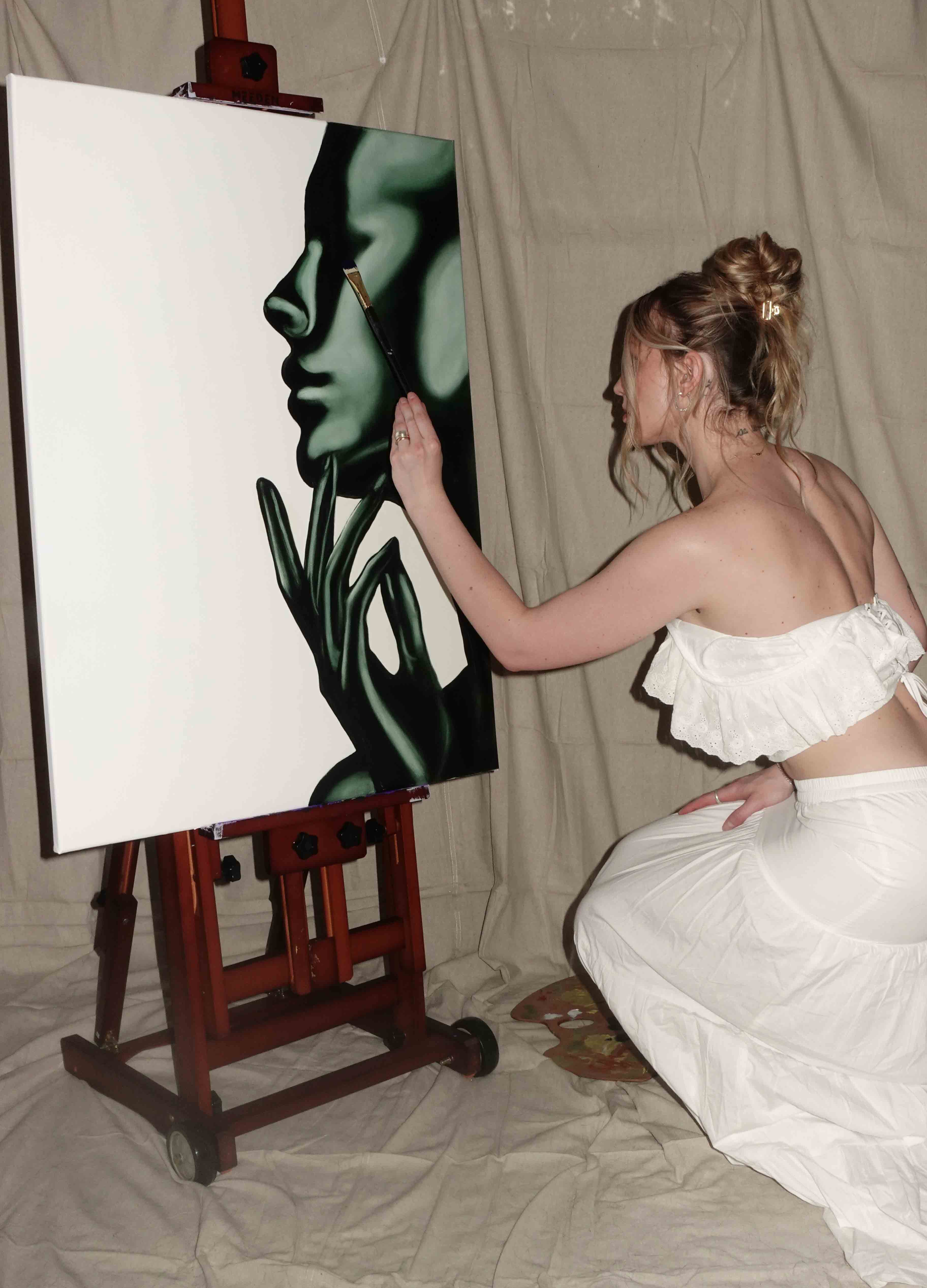
Once I have a mental image of what I want to paint, I create a reference drawing. That part is messy: multiple sketches, scribbles, and trial and error. It’s the behind-the-scenes work no one sees, but it often takes the most time.
When the sketch feels right, I transfer a rough version onto canvas with either pencil or paint. Some paintings come together in one sitting; others take weeks or months, depending on the look I’m aiming for.
How do you overcome challenges such as creative blocks or difficult stages in your process?
When a painting isn’t going the way I’d hoped, I’ve learned it’s best to put the brush down and come back to it later. If I push through in frustration, I usually just overwork it and make things worse. It’s often not the painting itself, but the weight of the day that I end up projecting onto it.
I’ve also found that some of my best work happens when I stop fixating on technique and just paint instinctually. Creative blocks can feel like a pulled muscle, so when I want to create but don’t know what to paint, I turn to doodling. I love doing “zentangles,” where I scribble randomly and then fill in the shapes with patterns and drawings. It’s meditative, playful, and often sparks new ideas through unexpected color and form.
How do you determine when an artwork is finished and ready to be shared with your audience?
I think most artists can relate when I say that no painting ever truly feels finished. Even when I think I’m done, I’ll walk past it a few times, stare too long, and suddenly I’m back with a brush, adding details or fixing something I hadn’t noticed.
Knowing when to stop is something I’m still learning. It’s about recognizing the intention behind each brushstroke and learning to embrace imperfections rather than obsessing over perfect blending or realism.
So are my paintings ever “done”? Not really. But when I can look at one and feel genuinely proud, that’s usually when I know it’s finished—or close enough.
Is there a particular piece you have created that holds special meaning for you? Can you tell us the story behind it?
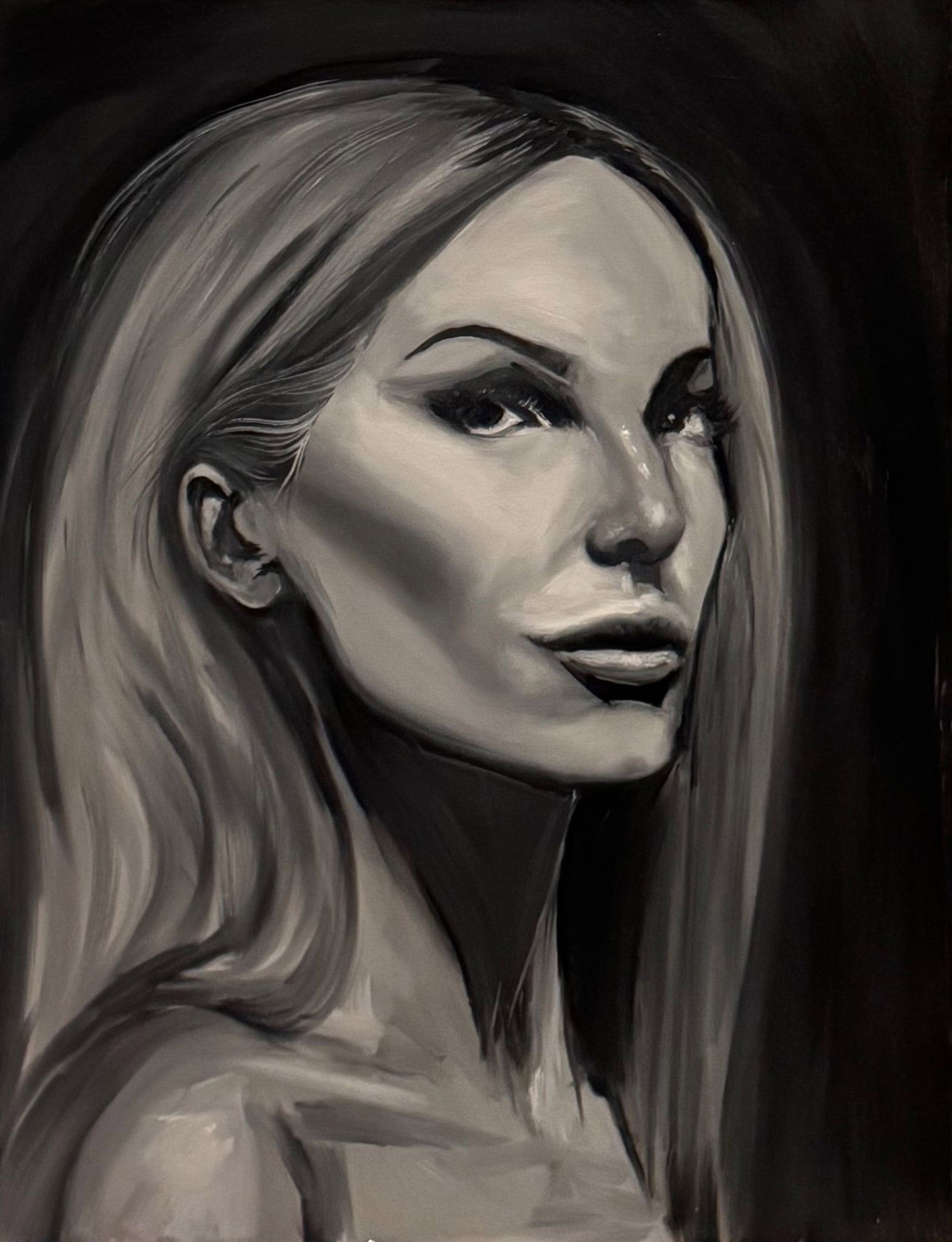
Yes, it’s actually a painting that’s quite different from my usual style: a memorial portrait of our friend Nikki Tomkins, who passed away unexpectedly this year. When someone dies young, there are truly no words that make it better—nothing that can bring them back or ease the pain for those left behind.
Painting her on a whim, shortly after she passed, became a way to say everything I couldn’t express in words. Seeing how deeply it moved her family and loved ones was incredibly humbling—a bittersweet, heartbreaking kind of reward. The portrait now lives with her mother, Marge.
Where is your usual workspace, and how does your environment or routine influence your creativity?
I’ve turned one of our spare bedrooms into a makeshift home studio, and having a dedicated space in my daily environment makes a huge difference. I can jump into a painting session whenever I have a free moment, without needing to plan ahead.
My two dogs are usually close by, watching curiously. Having all my materials within reach means I can act on creative impulses instantly. That accessibility has been key—it removes barriers and keeps me connected to my practice, even with a full schedule.
How do you respond to feedback or critique on your work? Does it affect the way you approach your art?
Art is so subjective—not everyone will love what you do, and that’s okay. I actually welcome feedback from other artists whenever I can. I’m eager to keep learning, and honest critique helps me grow, try new techniques, and see things from a fresh perspective.
That said, positive feedback has been a huge confidence boost. Hearing “Wow, people like this?” helped quiet the impostor syndrome I still sometimes wrestle with.
As for negative feedback—I’ve worked in sales and been exposed to criticism from a young age, so I’ve learned not to take it personally if it’s something hurtful. Sure, it can sting when something you’re proud of doesn’t land how you hoped, but I’m usually my own toughest critic anyway. Most of the time, any flaw someone points out is something I’ve already noticed, and that just pushes me to improve.
Looking to the future, are there new techniques or themes you would like to experiment with?
It’s hard to choose just one, but lately I’ve been especially drawn to the idea of incorporating sculptural and textured elements into my paintings—using materials like air-dry clay or modeling paste. I think adding that extra layer of dimension can bring something really special to a piece, and I’m excited to start experimenting with it soon.
What is the role of your website, tsev.gallery, in your artistic career? Do you see it primarily as a portfolio, an online gallery, or a way to sell your work?
My website is still in the works, but my goal is for it to serve as a central hub for everything I do—a place to showcase my portfolio, share available works, and make it easy for collectors to purchase originals and prints. I want it to feel like a curated space where people can connect with both my art and my story.
How do you approach selling your art? Do you focus on original works, limited-edition prints, or commissioned pieces?
So far, I’ve only sold commissioned pieces, but once my website launches this fall, I plan to shift toward offering original works, limited-edition prints, and eventually wearable merchandise that features my art. I love the crossover between visual art and everyday life.
My hope is that prints and merch will make my work more accessible to a wider audience, while still keeping originals available for collectors. I’m also excited about the idea of including exclusive behind-the-scenes content as a bonus for those who purchase—a little glimpse into the process that brings each piece to life.
Have you had any formal training or business education related to your art, or have you learned primarily through experience?
Aside from a few art classes when I was younger, I haven’t had any formal training. I’m still learning every day, mostly through observation, experimentation, and trial and error. If I want to build a sustainable career from my art, I know the marketing and business side is just as important. That part is completely new to me, but it’s been an exciting challenge and a whole new area to grow in.
As an immigrant artist in Canada, how has your cultural background and journey influenced your perspective and experience in the Canadian art scene?
I was born in Canada, but I’m a first-generation Canadian—both of my parents immigrated from Russia. My earliest memories include watching them face language barriers, financial pressure, and the constant stress of starting over. That tension was always in the air, and it shaped me. I absorbed much of that anxiety, and it still lives in me.
Painting is how I quiet my mind. It helps me slow down, focus, and feel in control of an overwhelming world.
That internal tension—between intensity and composure—often shows up in my work. There’s a push and pull between bold color and minimal form, vivid expression and refined restraint. That contrast mirrors my lived experience and shapes how I approach both art and identity in Canada.
Your message for us at TOPS magazine.
Thank you for the opportunity to share my work and story! I’m truly honored to be featured by TOPS. I appreciate the space you create for emerging Canadian voices in the art world.