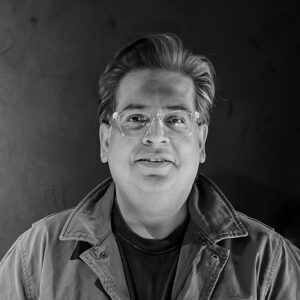
Turning Spaces into Timeless Visual Narratives
From Toronto to Tuscany, Brandon Barré has carved out a distinguished career as one of the most sought-after architectural photographers in the luxury hospitality world. With a portfolio that spans five-star hotels, award-winning restaurants, and high-end residences, his images are instantly recognizable for their cinematic composition, masterful use of light, and editorial polish. Over the past two decades, Barré has worked with top global brands, capturing spaces that don’t just look beautiful but they tell a story. His work transcends simple documentation, offering viewers a sense of place, mood, and experience. As he prepares for upcoming shoots in Vancouver and Italy, we caught up with the Toronto-based photographer to talk creative process, lighting philosophies, post-production finesse, and what it takes to make a space truly sing on camera. In this candid conversation, Barré shares career insights, personal inspirations, and the meticulous artistry behind every frame he creates.
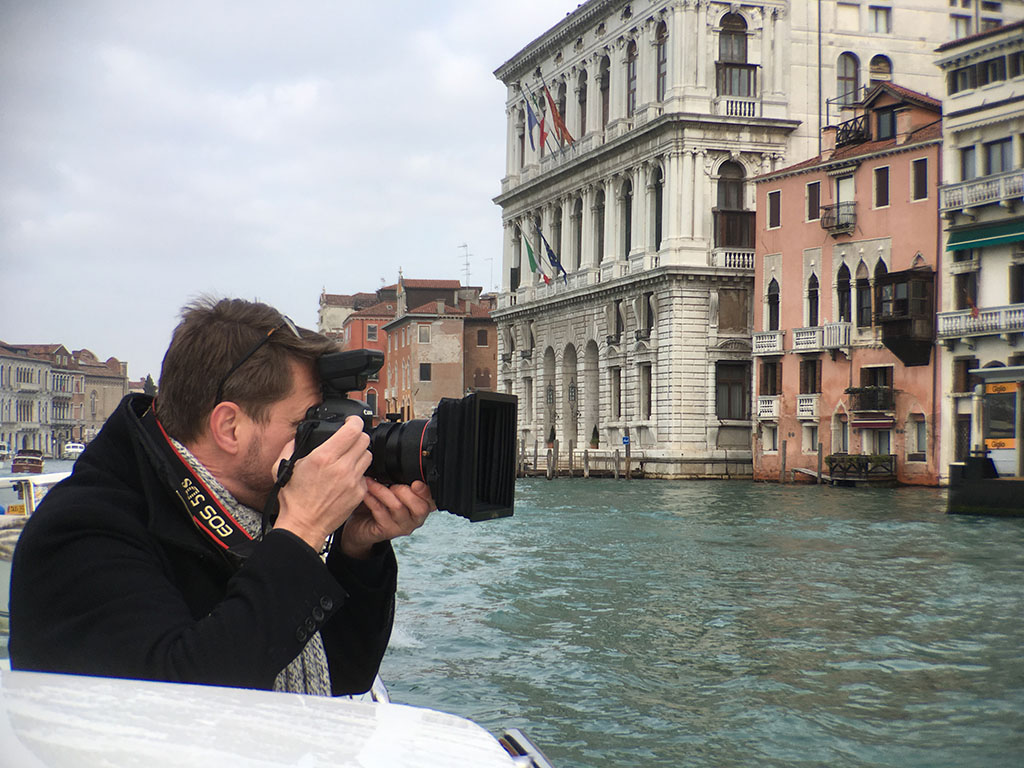
How did you first become interested in architectural and hospitality photography, and what were the key moments in your career path?
My entry into this world was pretty organic. I started out shooting a wide range of subjects, but it was really my early work on the TV series Divine Design that opened the door to interiors. That experience gave me the chance to hone my skills, photographing beautifully designed interiors under tight timelines. From there, one opportunity led to another eventually, I was shooting luxury hotels and restaurants, and that’s where I really found my creative home. A major turning point was when I began working with top-tier hospitality brands and collaborating with marketing teams to help share the stories and experiences their properties offer.
Your images are often described as bold, dramatic, and luminous. How do you approach composition and lighting to achieve that signature style?
It all starts with really understanding the mood of the space. I’m always looking for a strong composition first, clean lines, symmetry or deliberate asymmetry, and focal points. Lighting, for me, is about sculpting the architecture and creating atmosphere. I almost always blend natural light with controlled artificial lighting to bring out dimension, colour, and texture.
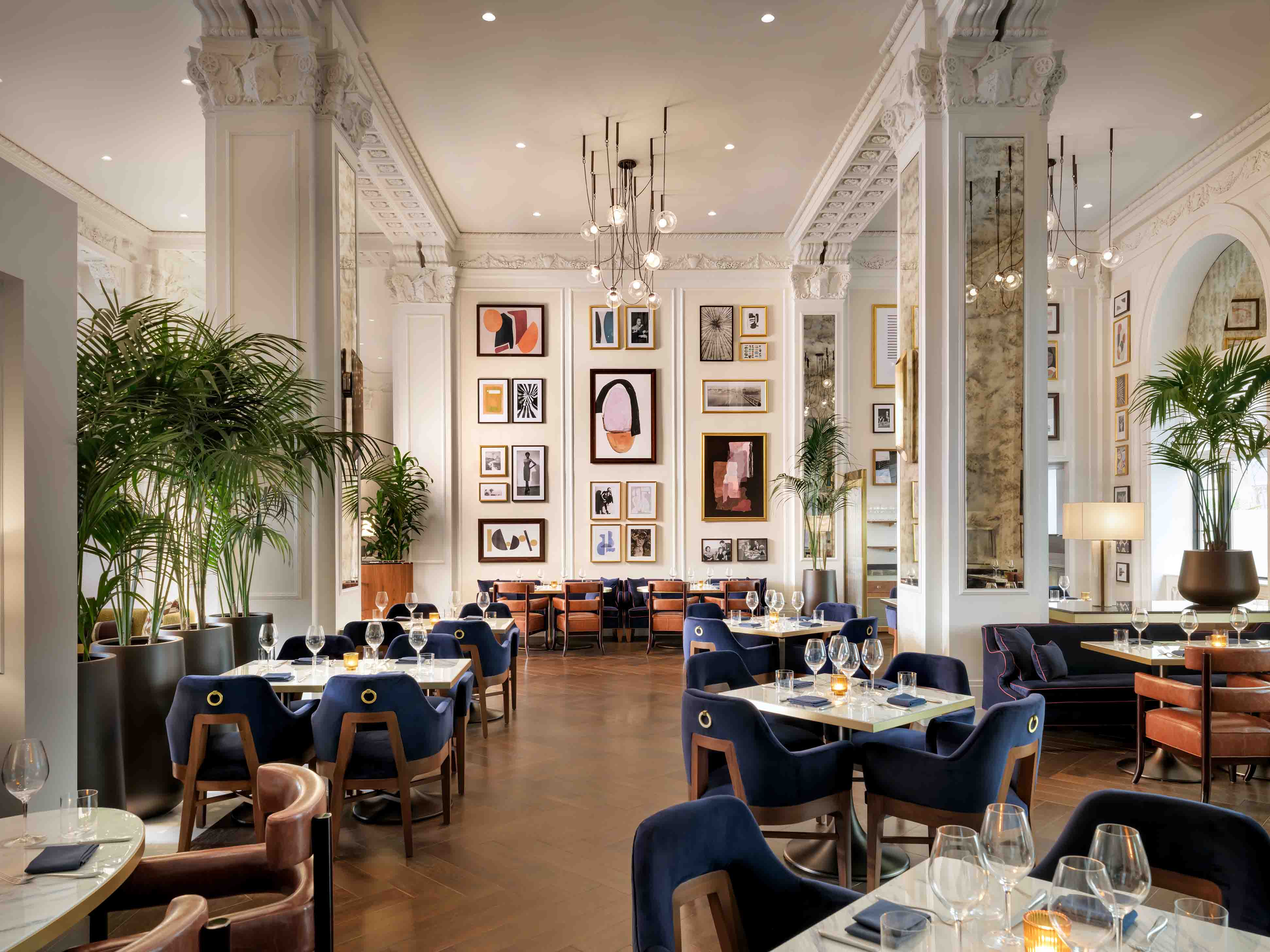
How did you develop your editorial aesthetic, and what influences have shaped your visual style over the years?
I’ve always been drawn to editorial imagery, the kind that feels aspirational but still real. I studied a lot of shelter magazines growing up (probably more than I’d care to admit), and over time I pulled inspiration from everywhere fashion photography, travel, cinema. My aesthetic really sharpened once I started shooting for clients who weren’t afraid of bold light and shadow. Over the years, I’ve worked to distill that into a style that feels elevated but approachable creating images that feel cinematic without losing the integrity of the existing lighting and design.
Lighting plays a crucial role in your work. How do you plan and manage lighting on location, especially in challenging environments?
Planning is everything. I always scout ahead Ideally at the same time of day we plan to shoot so I know how natural light interacts with the space. I travel with a lean but effective lighting kit strobe, modifiers, gels, so I can finesse as needed. But I’m also mindful not to over-light. In challenging environments, like a dim restaurant or a space with mixed lighting, I always work in layers controlling flare, adjusting colour balance, and lighting in zones so I can build the shot gradually without it feeling artificial. It’s about being prepared but also knowing how to pivot (and later edit!) when the sun disappears behind clouds five minutes before sunset.
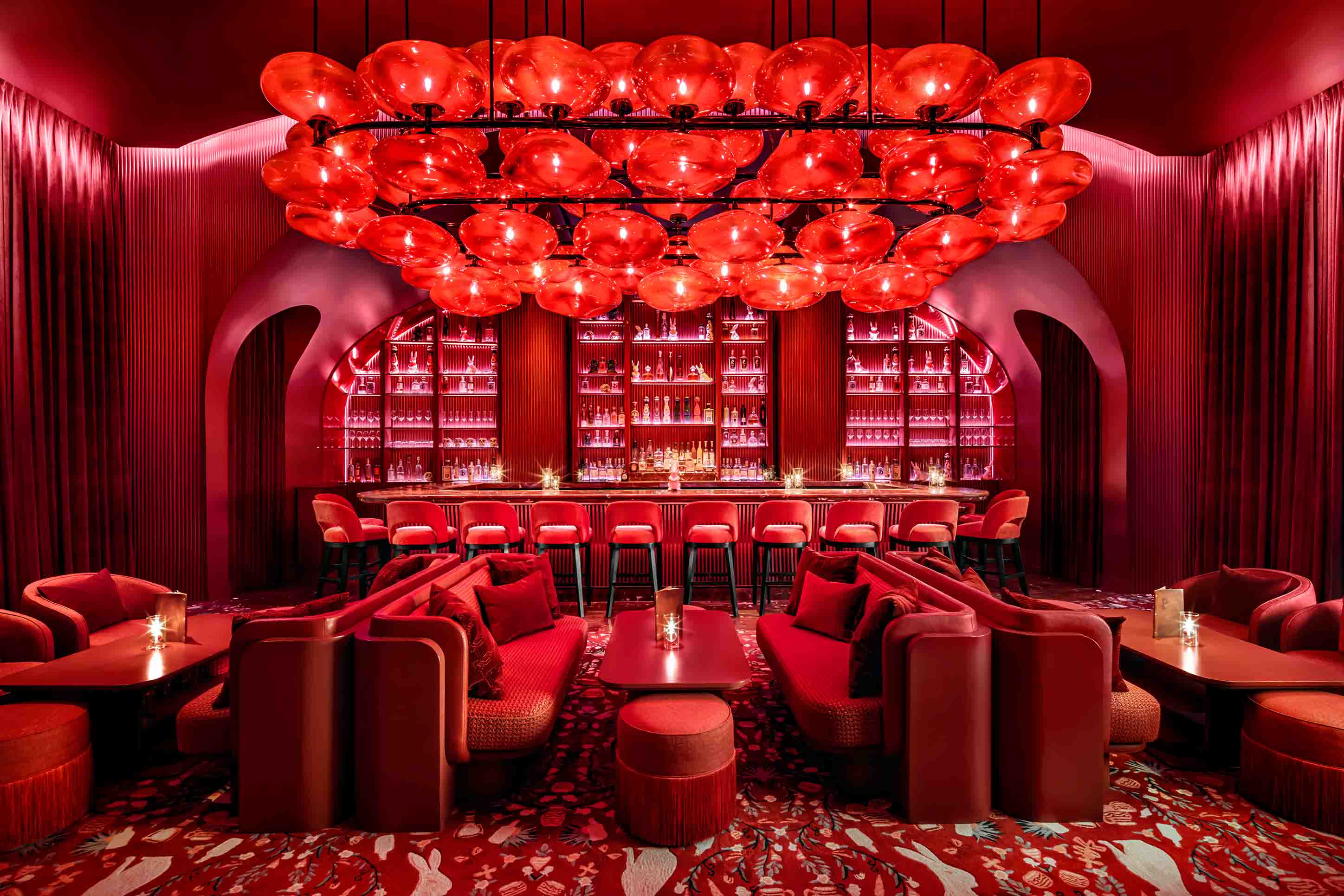
What is your process for staging and styling a space before shooting, and how do you collaborate with clients or designers during that phase?
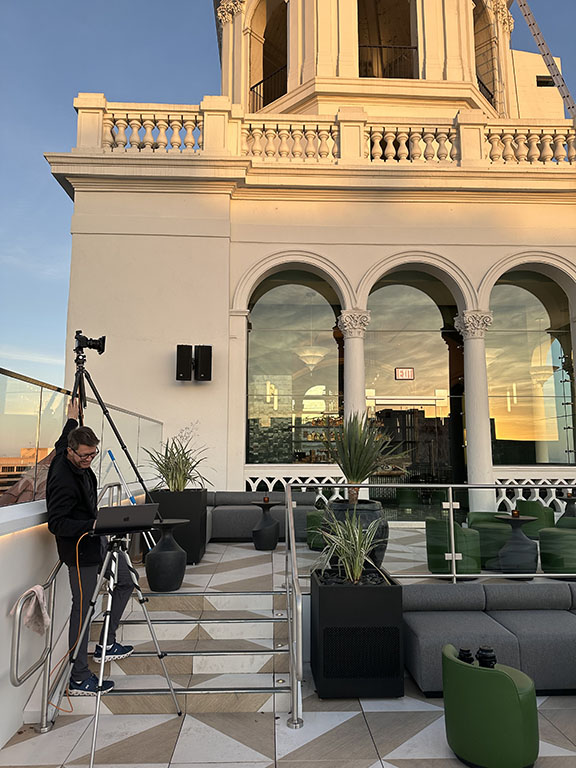
Styling is an essential part of the process, and I love collaborating closely with designers on that front. Generally, we look over scouts and renders in advance and discuss the story they want the images to tell. Then, on the day, it’s all about refining: adjusting pillows, moving furniture, swapping accessories, or adding just a bit of human presence to bring the space to life. I always shoot tethered, so everyone can be involved in fine-tuning before we commit to the final frame.
How much emphasis do you place on post-production, and how do you ensure your images maintain a balance between polished and authentic?
Post-production is hugely important, but for me it’s about enhancement, not transformation. I want the image to feel elevated rich tones, clarity, and dimension but never plastic or over-rendered. Fifty percent of the final look is created on the day, and the other fifty percent is in the editing. The degree of polish often depends on the client. North America tends to prefer a more authentic, editorial, and somewhat lived-in look, while other parts of the world are all about absolute perfection and aspiration.
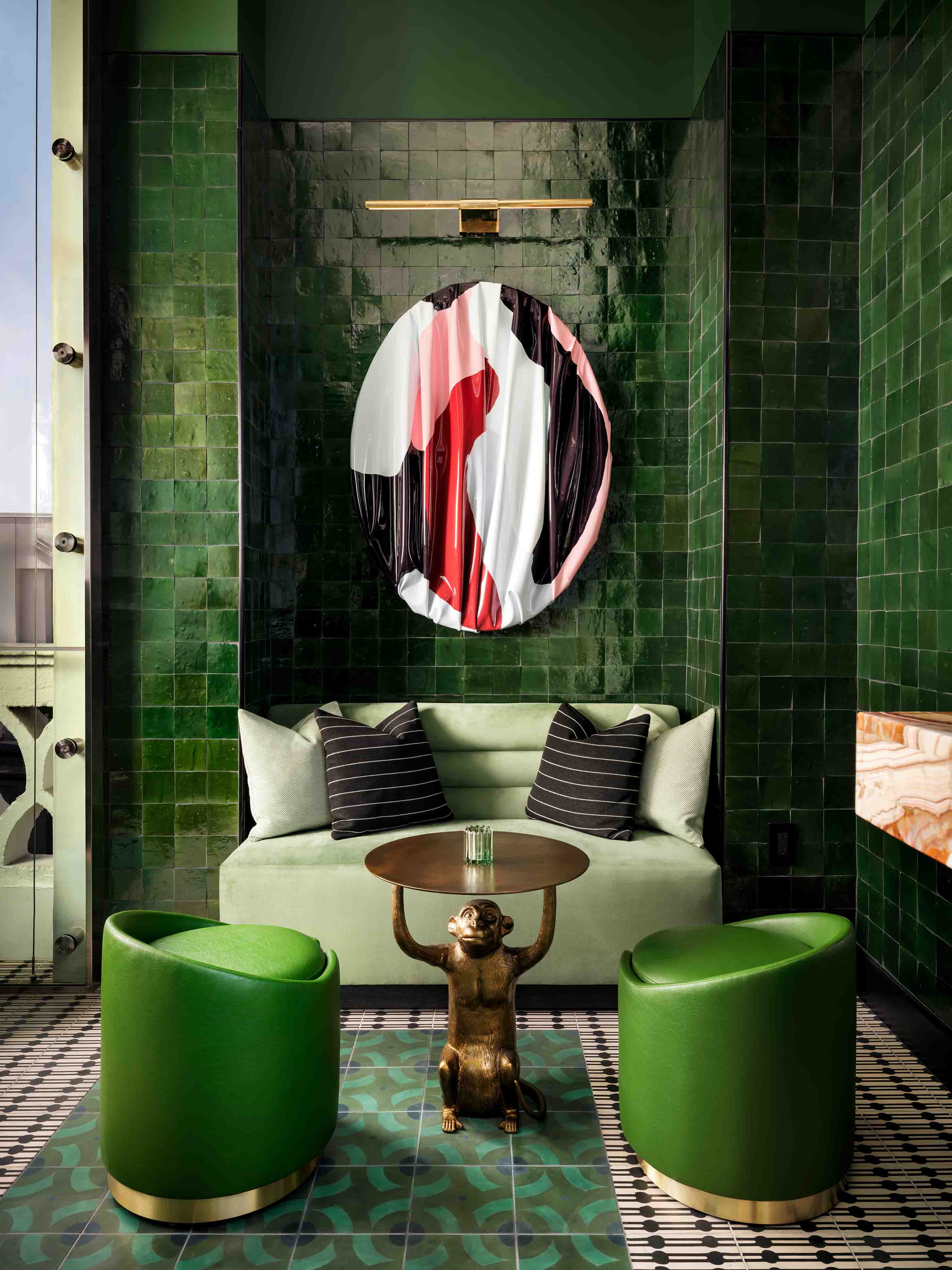
You photograph a variety of environments, from luxury hotels and resorts to restaurants and high-end residences. How do you adapt your approach to each setting?
Each environment has its own rhythm. For a resort, I’m thinking big picture lifestyle, landscape, ambiance. A restaurant shoot might be more intimate and mood-driven, focusing on lighting and detail. My approach always starts with understanding the function of the space, the brand or designer’s vision, and then building a visual language that fits.
How do you tailor your photography to reflect the brand identity and goals of major hospitality clients?
Every brand has its own messaging and corresponding photography guidelines. I spend time upfront getting to know the brand their voice, aesthetic, and the kind of story they’re trying to tell. Are they sleek and modern, romantic and old-world, lifestyle, luxury, or a mix? Then we collaborate to build a visual approach that aligns.
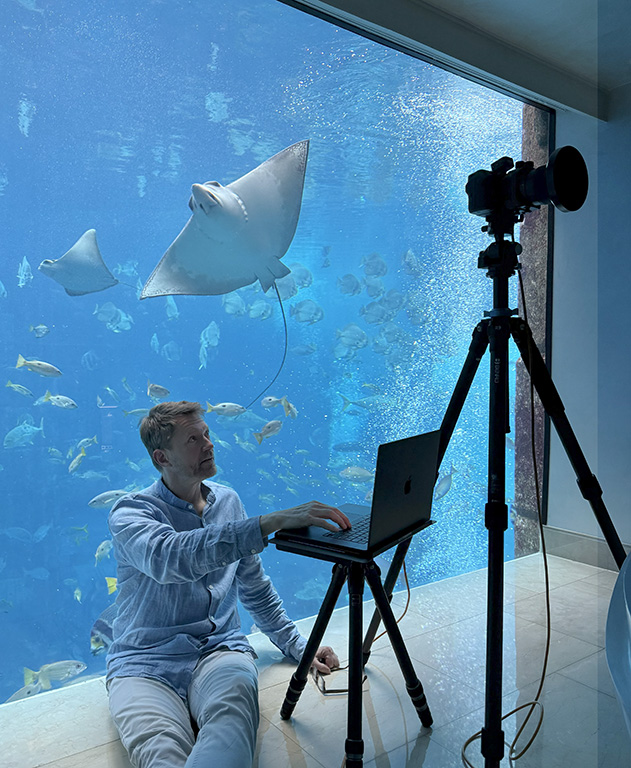
With your international assignments, how do different locations influence your creative approach?
I try to let go and allow the feeling of each specific location and environment to wash over me and inform the creative process. I love this part of the job because I feel almost like a photojournalist just being in the moment of the existing environment and light, and capturing it as authentically as possible.
Can you walk us through the logistics and creative challenges of managing a large-scale project, such as a luxury resort shoot?
These projects are often multi-day productions with exacting timelines and many moving parts weather, staffing, access to spaces, meeting room setups, etc. It starts with a solid production plan: a detailed shot list and a schedule built around ideal light. It’s about flexibility knowing when to pivot if the light shifts or a space isn’t ready. We also exchange plenty of emails and typically have one or two pre-production calls before arriving on site.
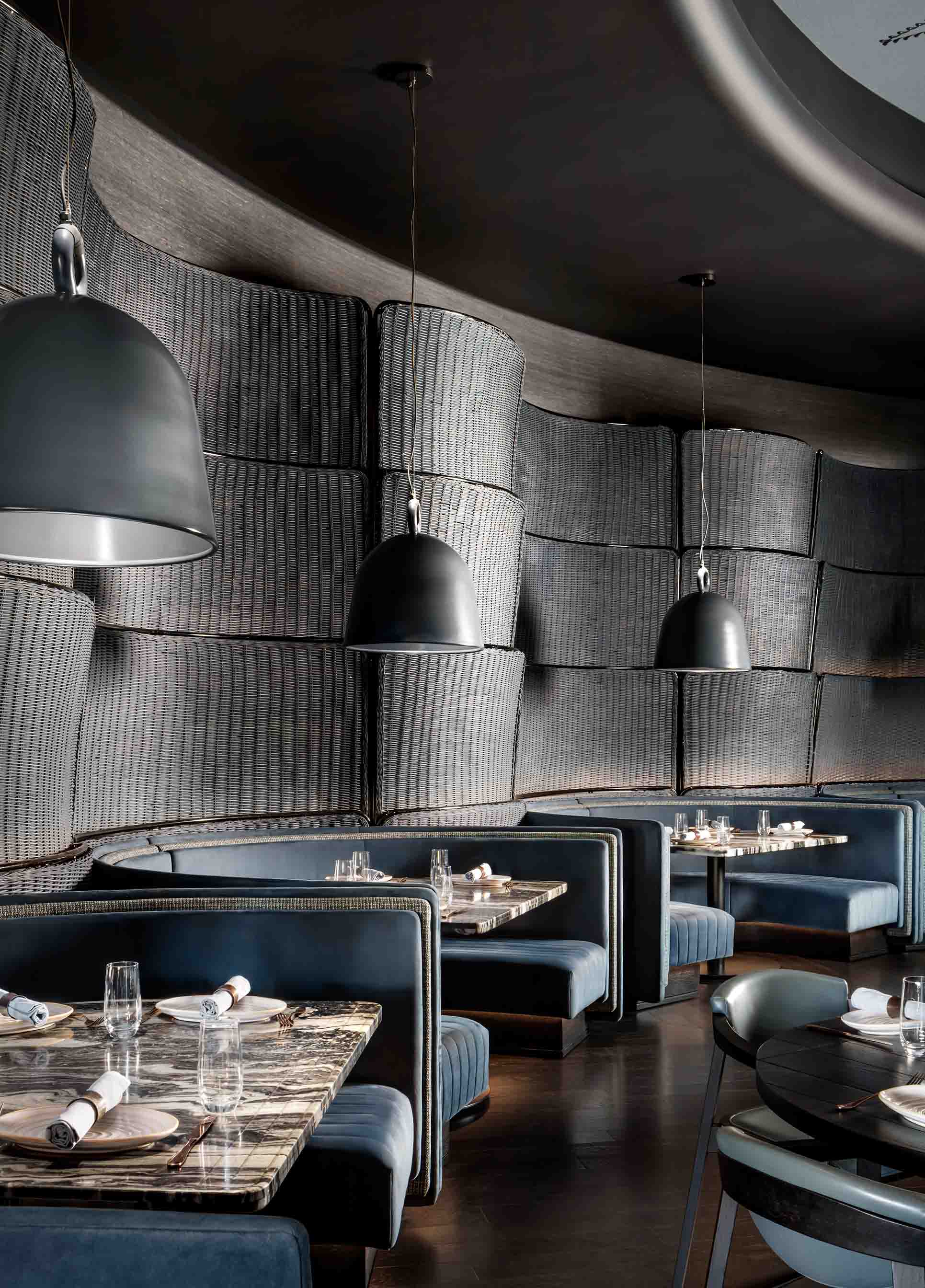
Many venues require shooting outside of standard hours. How do you plan for and manage nighttime or off-hours shoots?
When possible, I lean into planning shots around golden hour, twilight, or early mornings to achieve that atmospheric, cinematic quality. Night shoots are no one’s favourite, but as painful as they are to execute, they’re sometimes the only option and the results can definitely be worth it.
What advice would you give to aspiring photographers who want to break into the luxury hospitality sector?
Build a killer portfolio even if you have to sneak in to shoot a few hotel lobbies on off-hours (just don’t tell anyone I said that). Focus on mastering light, composition, and creating images that you’re truly proud of. Then get out there and network. Be someone people want on set collaborative, professional, and open to feedback. And know that every detail matters. If you’re not obsessing over pillow corners yet, you will be.
What has been one of the most significant challenges you’ve faced on a shoot, and how did you overcome it?
You do try to anticipate and plan for setbacks like weather or installation delays, but sometimes you just have to make the best of what you’ve got or regroup and plan a second visit. Something that’s happened more than once is checked lighting gear not arriving with us after connecting flights. In the past, I had to scramble to rent whatever low-end gear was available at the last minute. Since then, I’ve learned to pack my tripod head and tabletop tripod in my carry-on so we can make do until the luggage arrives. Shooting with ambient light only bracketing and flagging like crazy isn’t the worst thing in the world and can yield very natural results if you take the time to layer your plates properly.
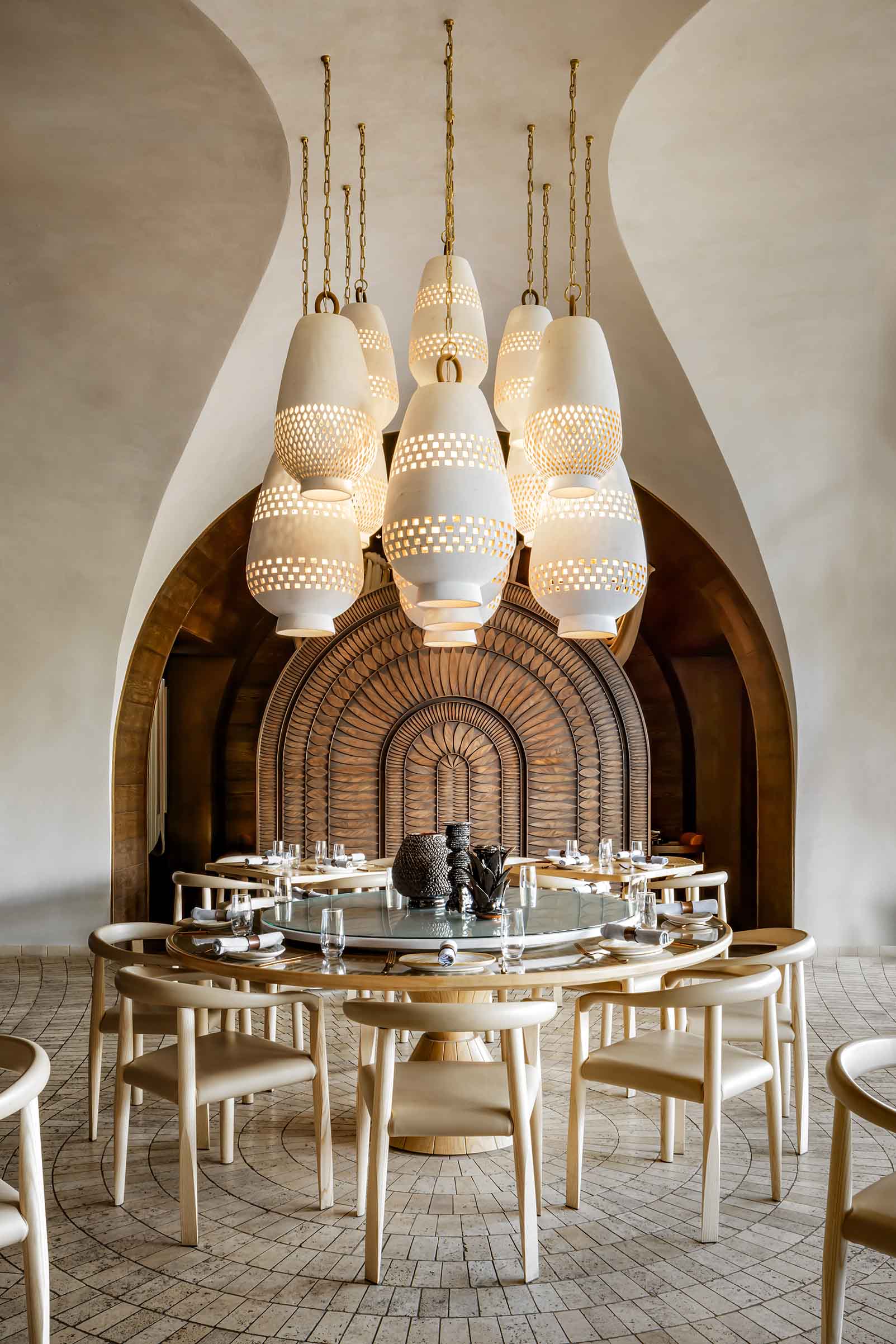
How does your technique differ when photographing a building’s exterior versus its interior spaces?
With exteriors, you’re playing the long game with natural light waiting for that perfect moment when the architecture, sky, and surroundings align photogenically. You’re also dealing with lots of variables: weather, reflections, landscaping, guest traffic, and often construction crews if we’re shooting pre-opening. Interiors can be more controlled. The challenge becomes how to shape light, highlight details, convey atmosphere, and emphasize the space’s strengths while minimizing distractions.
How has being based in Toronto shaped your photography, and what local trends or design elements do you find inspiring?
Toronto has a unique design language a blend of international influence with a real appreciation for high-end and creative interior design. I’ve had the chance to photograph everything from globally branded hotels to arty boutique properties and everything in between, which definitely keeps things interesting.
Italy has a rich architectural and cultural heritage. How do you approach photographing historic properties differently from modern spaces?
Photographing historic properties is almost like portraiture you want to showcase their age and character in the best possible light without erasing the patina that gives them soul. I’ve typically been drawn to modern design, but having the opportunity to shoot incredible historic spaces in Venice and Milan has expanded my aesthetic and deepened my appreciation for a wide range of architecture and design periods.
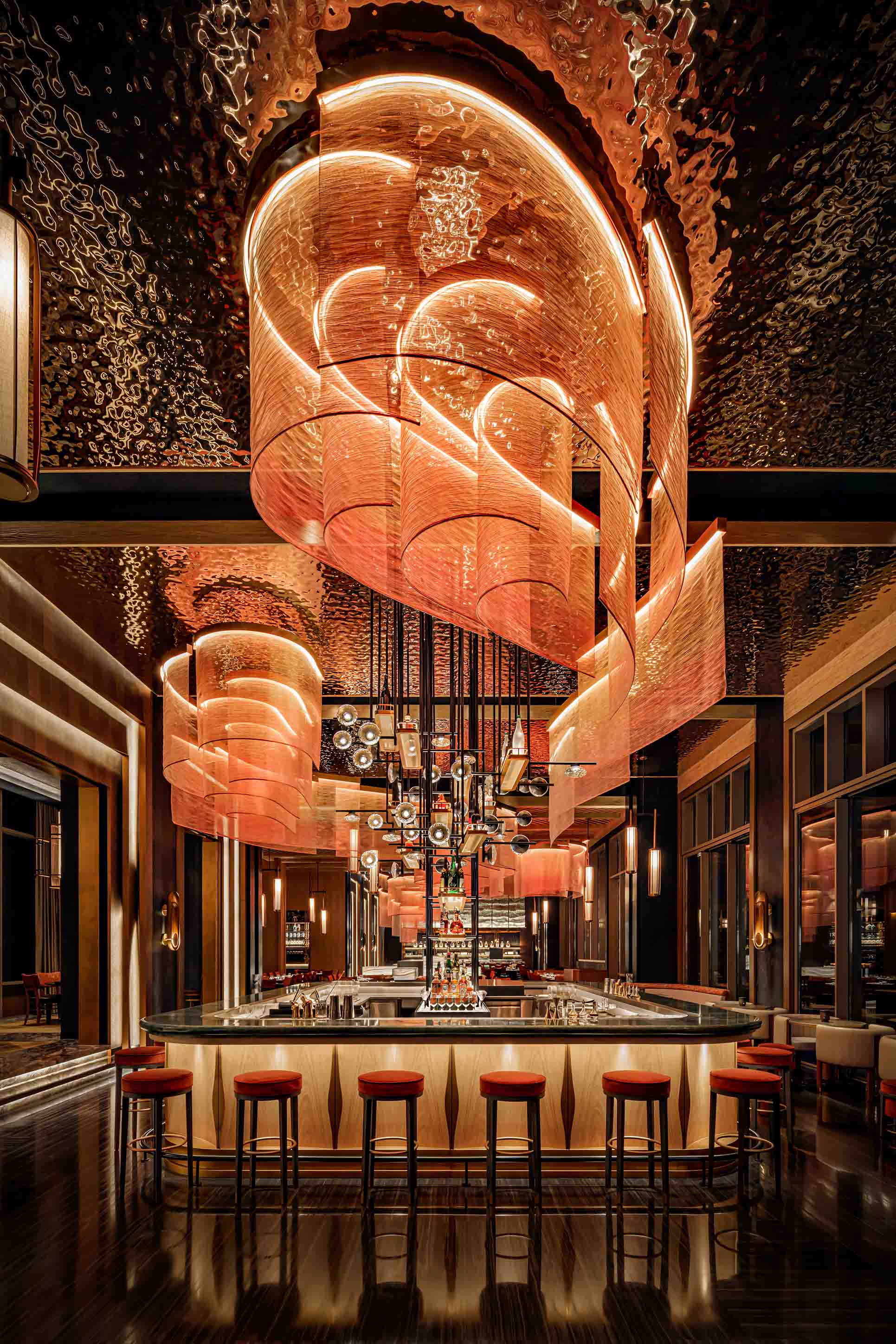
How does your approach differ when shooting for editorial features versus commercial advertising campaigns?
These two genres have started to overlap over the years. Editorial shoots are more about narrative showing a space with emotion, flow, and subtlety, like a storyboard for a short film. You can linger in a moment, play with shadow, and embrace imperfection through a mix of wide shots, vignettes, and close-ups. Commercial campaigns are generally more polished, deliberate, and tightly directed. Everything must serve the brand message and be as clean and communicative as possible. For me, it’s the same camera, same eye just wearing two different hats.
How do you manage high-quality output on tight deadlines, especially when clients need images quickly?
Communication is key understanding exactly what the client needs, prioritizing a focused group of shots, and managing expectations. Editing in this genre takes more time than many clients realise, so being upfront helps ensure everyone’s on the same page.
What has been your most memorable photoshoot to date, and what made it particularly meaningful for you?
That’s a tough one! We’ve been lucky to have so many memorable experiences, but visiting Kuwait to shoot some out-of-this-world restaurants really stands out. It’s such a uniquely different culture — not only from North America or Europe, but also from other parts of the Middle East. It was eye-opening and creatively inspiring.
Your message for us at TOPS Magazine.
Thanks for inviting me to be part of this feature. It’s an honour to share a bit of the story behind the images. I’ve always believed great architectural photography is about more than just top-of-the-line gear and beautiful spaces, it’s about how the environments make you feel. If I can capture even a fraction of that emotion in my work, then I’m doing what I set out to do.