Crafting light, colour, and history in every pane.
Toronto’s creative spirit shines through many mediums, but few capture light, colour, and history quite like stained glass. At the heart of this craft is Kristie Urbanski, the artist behind Cabin Glass and Toronto Glass Studio. Known for her stunning custom leaded windows, modern decorative panels, and immersive workshops, Kristie blends traditional techniques with contemporary design to create pieces that elevate both homes and public spaces. Her journey into stained glass began serendipitously, yet quickly evolved into a lifelong passion – one that now connects her with clients, designers, and students across the city. From intricate copper foiling to the timeless strength of lead came, Kristie’s work reflects both patience and precision, reminding us that glass is not only functional, but deeply expressive. In this exclusive interview, she shares insights into her creative process, the role of light in design, and why stained glass continues to resonate with modern audiences while preserving its centuries-old artistry.

Please briefly introduce yourself to our readers.
My name is Kristie Urbanski and I am a stained glass artist living and working in Toronto. I share my artistic process and projects on my Instagram account, @cabinglass. My main focus is custom leaded glass windows for homes and commercial spaces, but I also create decorative items using the Tiffany foiling technique. I make a variety of stained glass works such as windows, custom light fixtures, privacy panels, decorative ornaments—truly anything you can dream up in stained glass. I recently began sharing my love of stained glass by teaching workshops.
What originally led you to choose stained glass as your art form?
A few years ago, I was on a road trip and met a stained glass artist. She made modern ornaments and decorative, nature-inspired panels that felt much more contemporary than the stained glass I had known. It inspired me to learn. I took one workshop and I was instantly hooked. The range of tasks throughout the process kept me engaged in a way I had never felt with other forms of art. I continued learning with a mentor, along with lots of practice and trial and error. I haven’t stopped creating since that first workshop.
How does living and working in Toronto colour your creative process?
Toronto is a very creative and inspiring city. Since sharing my work online, I have met so many other local artists and designers. Collaborating with other artists and working with designers has shaped the wide range of projects I have had the opportunity to create. The variety of requests I’ve received has allowed me to work on projects I likely wouldn’t have decided to make on my own.
When starting a custom window, where do you like to begin, pattern/concept, or palette?
When starting a custom window, I begin with a pattern or concept. Either a client will reach out with their vision for the piece, or they give me free rein with the design. If they are open to my design, I visit their space and create a concept or pattern that I feel flows nicely within their environment. From there, we choose the palette together.
How do shifts in natural light guide your colour and glass choices?
Both natural and artificial light are very important factors when choosing glass. A single piece of glass can look completely different depending on the light. When planning a project, I like to show clients how glass will look in different settings. I may send photos of their glass choices in various windows, laying flat on a white surface, and against different backdrops. The colour of the glass can shift significantly, from lighter tones to more saturated ones, depending on the setting.
Tell us about a design you completed that ended up exceeding your expectations.
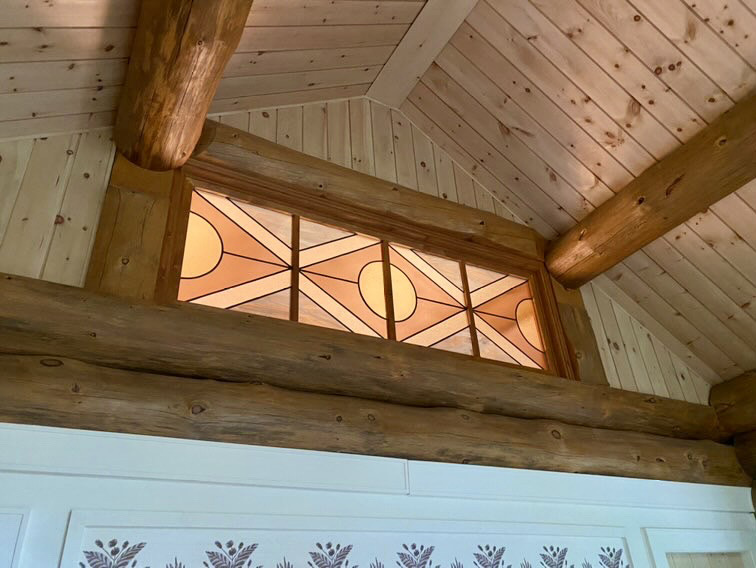
In my early days of working with lead, I completed a very large-scale transom window for a beautiful log cabin up north. It had to be installed as four sections. Each of these sections only had seven pieces of glass in the stained glass pattern. Although the design was simple, it made a huge impression on the space. The geometric simplicity let the glass speak for itself, and the piece truly stood out.
Do you prefer the fluid curves of copper foil or the structured lines of lead came?
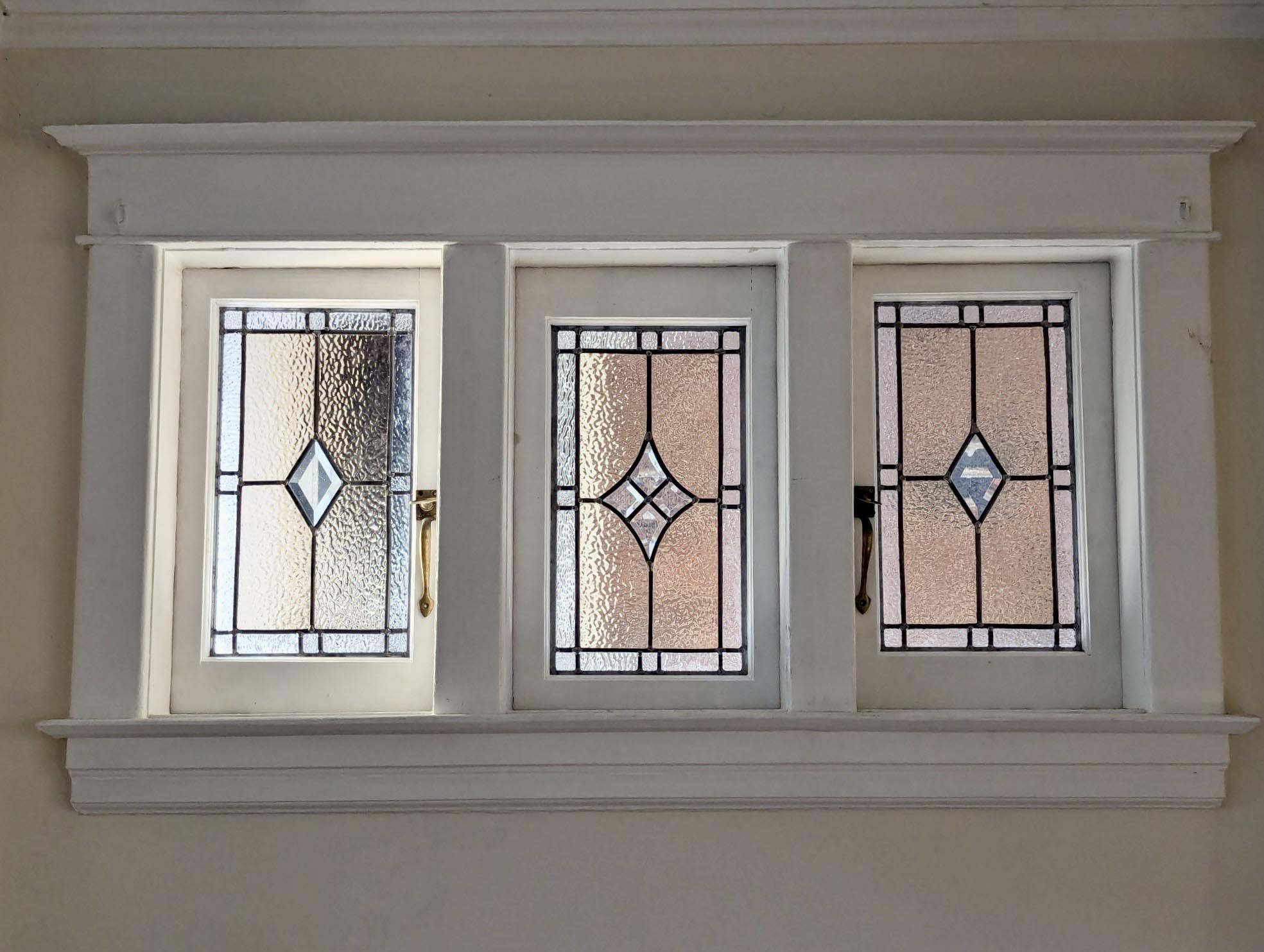
Working with lead is my preferred method. I really appreciate the strong, structured lines of lead and the timeless process of creating with it. This method has been used for centuries and is one of the only art forms that hasn’t changed much over time. When I am making lead windows, I feel like I am creating a part of history. If properly cared for, stained glass windows can last for generations.
What’s the most surprising question you get as a workshop instructor?
I haven’t received any surprising questions, but the feedback I love most is how meditative my students find the process. That’s exactly why I fell in love with stained glass, and being able to share that feeling with others brings me so much joy.
When clients come with strong ideas, how do you weave their voice into your vision?
I feel fortunate that my clients have always been very open to my suggestions when it comes to what works best in their space. Most will come with a general idea of the style they like, and together we create something unique that reflects both their style and their space.
What glass-shaping tool or material could you not imagine working without?
I’m not sure any tool is more important than the others, as many are required for the best outcome. If I had to choose a favourite, it would be my grinder. Perfectly shaping each piece to fit together like a puzzle is so satisfying.
Do you feel more connected to standalone art panels or architectural installations?
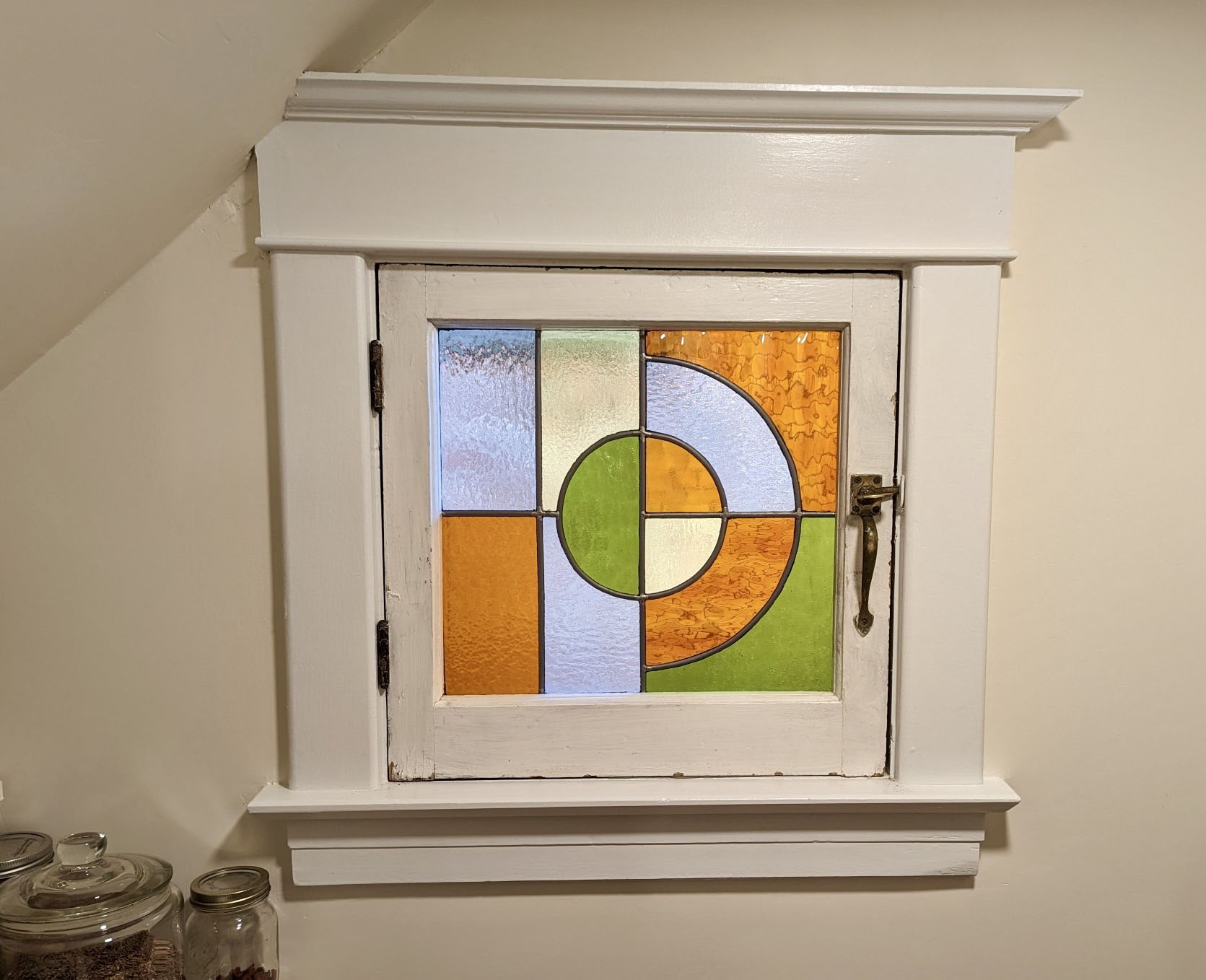
I feel most connected to leaded windows installed in homes. It’s incredibly flattering to know someone wants a piece of my work permanently in their space.
Do you have a creative ritual or music playlist for your studio time?
I usually make a coffee, turn on a soft lamp, sometimes light a candle, and sit at my desk for a few moments before starting. In those moments, I take in what I am about to create, review my projects for the day, and feel immense gratitude for the opportunity to be in the studio.
How has sharing your projects on Instagram reshaped your business approach?
Sharing my projects on Instagram has shaped my business entirely. I originally started @cabinglass as a photo journal of my work. It was nice to see my progress all in one place. Slowly, my page grew and I began receiving requests for custom pieces. I then created a website to better organize commission requests. My portfolio grew, and after working with a few designers, things really took off. I’ve remained busy ever since.
What is one myth about stained glass you wish more people understood?
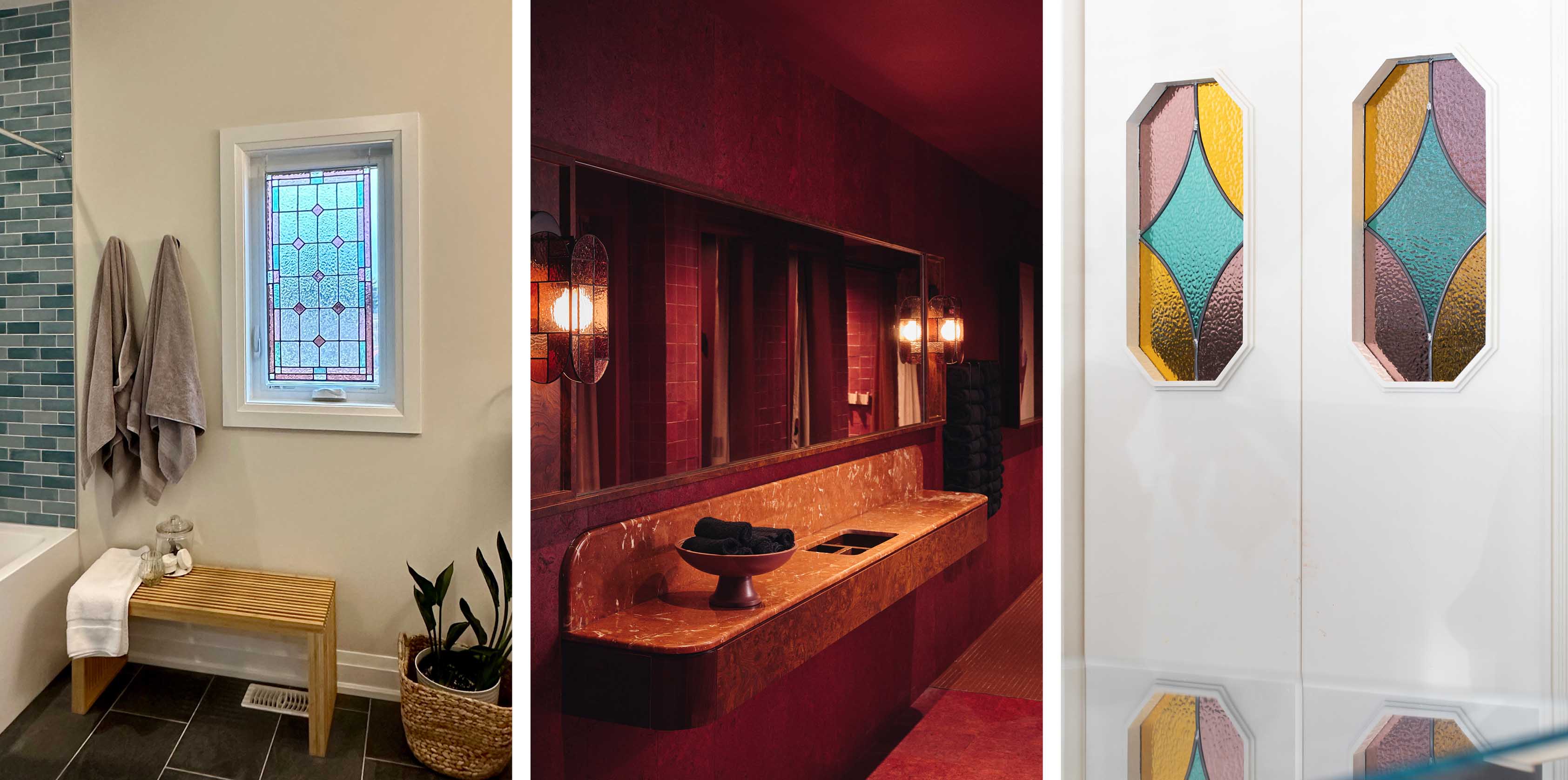
It’s not exactly a myth, but I wish more people understood how time-consuming stained glass projects are. Some take me months to complete, and sometimes even the planning stage takes longer than the building. I spend a great deal of time sourcing the perfect tones and textures of glass often driving to multiple suppliers. Creating the pattern can take many sketches before it feels right. Once the glass is cut, assembled, soldered, and cemented, the most tedious part begins: cleaning the cement as it cures. This process takes days to ensure nothing is missed. It can feel painstaking, but the results are always worth it. An immeasurable amount of love goes into every piece.
Which new glass colour or texture are you most excited to explore right now?
I have always been a huge fan of waterglass. It is simple and almost appears clear, but the refraction is absolutely stunning. It comes in many beautiful shades beyond the primaries, making it versatile for both traditional stained glass windows and modern contemporary designs.
Anyone who follows my work knows I am also a big fan of amber-coloured glass. Its range of tones from light to dark feels timeless to me.
Do commissions for cafés, churches, or homes demand a different mindset?
The biggest difference is whether or not I am working with a designer. Designers usually come with a clear idea of what the space requires, making it straightforward to plan and execute. Otherwise, I receive general ideas directly from clients and propose designs myself. I enjoy both approaches. They bring variety to my work.
How do you test a piece under light before it leaves your studio?
When choosing glass for each project, I always line up the pieces in different windows and in front of a light bulb. I want to see how it looks in various settings before committing to building. That way, I know how the completed piece will look in its new home.
What are some of your hobbies?
Originally, stained glass was my hobby, and I’ve been so fortunate to make it my life’s work. Outside of stained glass, I practise yoga (I used to be an instructor), enjoy camping and gardening, and love spending time up north by the lake with my family.
Your message for us at TorontoPages magazine.
Thank you so much for the opportunity to interview with you.