
The Most Forgotten Skin on Your Body
Most of us have been taught to apply sunscreen to our face, neck, and shoulders before heading outdoors. But there is one area that often gets completely overlooked: the scalp. As summer approaches and we spend more time outside, dermatologists are seeing increasing numbers of patients with scalp sunburn, irritation, and even precancerous skin changes. The truth is simple: your scalp is skin too, and it deserves the same level of protection and care as the rest of your body.
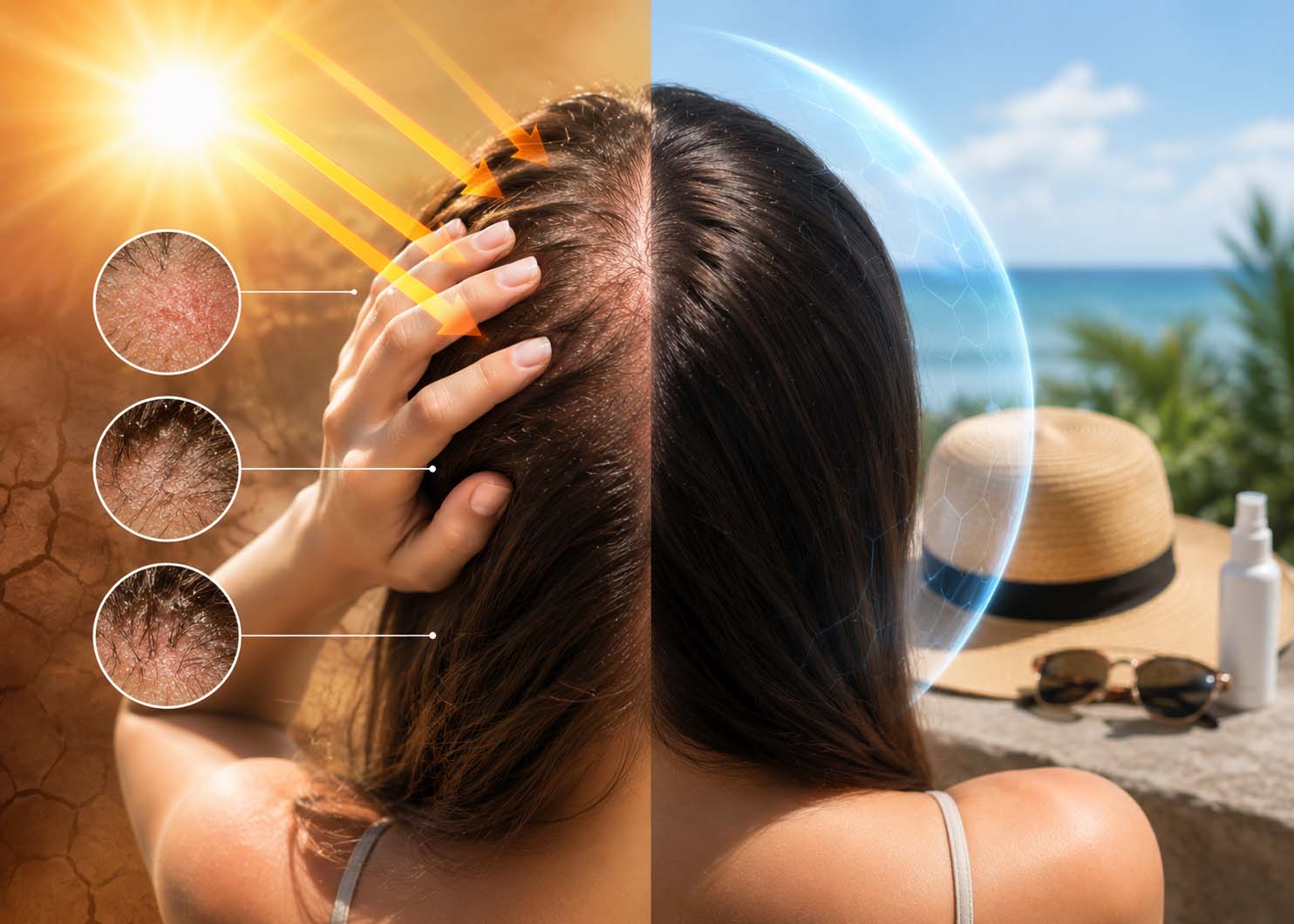
When people think about skincare, they usually focus on their face. Moisturizers, serums, sunscreens, and anti-aging treatments have become part of many daily routines. Yet the scalp, despite being one of the largest areas of skin on the body, is often forgotten entirely.
This becomes particularly important during late spring and summer in Toronto, when UV levels increase and people spend more time outdoors enjoying patios, festivals, parks, sports, and cottage weekends.
The scalp is exposed to the same ultraviolet (UV) radiation as the rest of the skin. In fact, certain areas can be even more vulnerable. Hair naturally provides some protection, but it is not a complete shield. Areas where the hair is thinner, the part line, the crown of the head, or receding hairlines receive direct sun exposure and can burn surprisingly quickly.

Many people do not realize they have a sunburned scalp until later in the day when they notice tenderness, redness, itching, or a burning sensation. Just like sunburn anywhere else on the body, scalp sunburn damages skin cells and contributes to long-term skin aging.

Repeated UV exposure can also increase the risk of developing actinic keratoses, which are rough, scaly patches caused by years of sun damage. While not cancerous themselves, they are considered precancerous lesions and should be assessed by a healthcare professional.
Another issue that often surprises patients is the effect of UV exposure on hair itself. Excessive sun can weaken the hair shaft, making hair feel drier, more brittle, and prone to breakage. For individuals already experiencing hair thinning, protecting the scalp becomes even more important.
So how can you protect your scalp without making your hair greasy or uncomfortable?
The first and most effective strategy is wearing a hat. A wide-brimmed hat or a cap with good coverage can significantly reduce UV exposure. This is particularly important during the strongest sun hours between late morning and mid-afternoon.

For those who prefer not to wear hats all the time, scalp-specific sun protection products have become increasingly popular. Lightweight sunscreen sprays, mists, and powders designed for the scalp can provide protection without leaving hair looking oily. These products are especially useful for people with thinning hair or exposed part lines.
If you colour your hair, scalp protection offers an added benefit. UV exposure can contribute to colour fading and dryness, so protecting the scalp and hair can help maintain both health and appearance.
Regular scalp checks are another habit worth developing. Most people rarely look at their scalp closely, which means changes can go unnoticed. If you notice persistent redness, rough patches, unusual spots, sores that do not heal, or areas that bleed easily, it is important to seek professional evaluation.
The scalp also benefits from proper cleansing and hydration. Using shampoos appropriate for your scalp type and avoiding excessive product build-up can help maintain a healthy skin barrier. If your scalp feels persistently itchy, flaky, or irritated, it may be worth discussing these symptoms with a dermatologist, as conditions such as seborrheic dermatitis, psoriasis, or eczema can affect the scalp.
As a dermatologist, I often remind patients that healthy skin care should not stop at the forehead. The scalp deserves the same attention and protection that we routinely give to our face.

This summer, before you reach for your sunglasses and sunscreen, take a moment to think about the skin hidden beneath your hair. A few simple protective habits today can help prevent discomfort, premature aging, and more serious concerns in the future. After all, the scalp may be the most forgotten skin on your body, but it is certainly one of the most important.