
From Oshawa Rinks to Forbes 30 Under 30:
Building Sport Without Barriers
At just 23 years old, Zechariah Thomas is emerging as one of the most influential young voices reshaping the future of sports accessibility in Canada. The Jamaican-Canadian founder of Swift Sports has transformed his own experiences growing up in Oshawa into a multi-million-dollar business built on one core belief: high-performance sports equipment should not be a luxury. Recently named to the prestigious Forbes 30 Under 30 list, Thomas is quickly gaining national attention for challenging the traditional pricing structures that have long made sports like hockey inaccessible for many families.
Originally launched as Swift Hockey in 2022, the company has now evolved into Swift Sports, expanding into fast-growing categories such as pickleball and lacrosse while continuing its mission of affordability, innovation and inclusion. Beyond business growth, Thomas is also focused on community impact, with initiatives that include donating nearly $100,000 worth of sports equipment to underserved communities across North America.
In this exclusive interview with TorontoPages magazine, Thomas opens up about entrepreneurship, representation in sports, breaking barriers and why he believes access, not talent, remains the biggest challenge facing young athletes today.
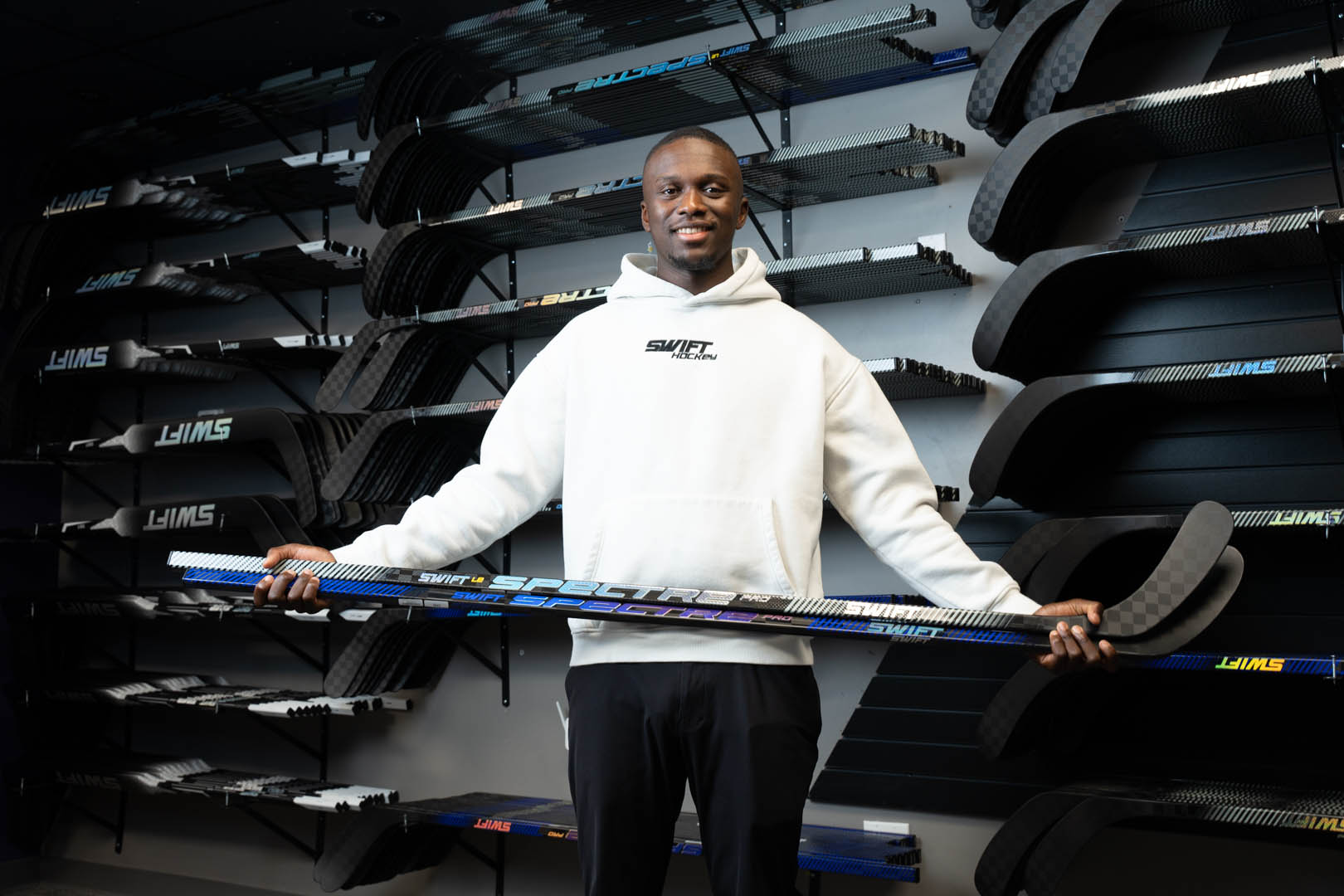
What early experiences shaped your perspective on access to sport in Canada?
I started playing hockey at ten in Oshawa, and pretty quickly I noticed two things: I didn’t see many players who looked like me on the ice, and a lot of the kids I came up with started disappearing from the rink, not because they lost their love for the game, but because their families couldn’t keep up with the cost. Watching talented teammates step away because a stick broke or registration fees came due shaped how I think about sport in this country. Hockey is sold to us as a national identity, but the reality is that, for too many families, it’s a closed door.
You’ve spoken about facing access challenges yourself. What were those barriers, and how did they directly influence the creation of Swift Sports?
Sticks priced at more than $300, equipment costs, ice time and travel, my parents stretched themselves to keep me in the game, and I never forgot that. The barrier wasn’t talent; it was the price tag attached to participation. Swift was sparked by the frustrations I had with access in the game. I wanted to design elite-level equipment without the legacy markup, so the next kid in my position doesn’t have to choose between playing and not playing.
At just 23 and already a Forbes 30 Under 30 honouree, how has that recognition impacted your leadership or growth strategy?
Being on the 2026 list and being one of only two hockey-related names on it was incredibly humbling, but it didn’t change the plan. What it did change was the platform. I take the responsibility that comes with that platform seriously: more young entrepreneurs from communities like mine reach out, more institutional doors open, and I’m able to advocate harder for affordability and inclusion. Recognition is fuel, not a finish line.
The transition from Swift Hockey to Swift Sports marks a big shift. What was the defining moment that told you it was time to expand?
When parents started messaging us asking, “Can you do this for lacrosse? Can you do this for pickleball? My kid wants to play, but we can’t justify the cost of the gear.” That feedback kept piling up. We realized the problem we were solving wasn’t just a hockey problem, it was a sports industry problem. Once that clicked, the expansion wasn’t a question of if, but when.

Why did you choose to enter high-growth sports like pickleball and lacrosse specifically?
Lacrosse has deep Canadian roots and a passionate, growing player base that has been underserved by big-brand pricing for decades. Pickleball is the fastest-growing sport in North America, and the equipment economy around it is still wide open. Both are sports where families are walking into the experience for the first time: they’re price-sensitive and paying attention. That’s exactly where Swift can make a difference. And this is just the beginning, we’ll be rolling out plans to enter more sports categories soon.
Your direct-to-consumer model challenges traditional pricing. What inefficiencies in the industry are you most focused on disrupting?
The biggest one is the legacy markup built into the way sticks and equipment travel from factory to player. There are wholesalers, distributors, retail partners and pro-team marketing budgets all stacked into the consumer price. We’re strategic in how we sell our products: we intentionally cut out the layers that don’t add performance value, sell directly to the player and pass the savings on. That’s the disruption, not cheaper gear, but fairer gear.
How do you balance affordability with high performance when designing equipment for competitive athletes?
We don’t compromise on the things that show up on the ice or the field: the carbon layup, the kick point, the balance and the durability. Where we save is on the parts of the supply chain and brand budget that don’t actually make a stick perform better. Our equipment is tested by competitive players, including professionals, and their feedback shapes every iteration. Affordable doesn’t have to mean entry-level.
What lessons have you learned scaling from a niche hockey brand into a multi-sport, multi-million-dollar company?
Stay close to the player. The minute a sports company starts designing for spreadsheets instead of athletes, the product loses its soul. I’ve also learned that scaling is a discipline, saying no to good ideas to protect great ones, and building a small team that punches well above its weight. And finally, culture is the product. People don’t just buy a stick from us; they buy what we stand for.
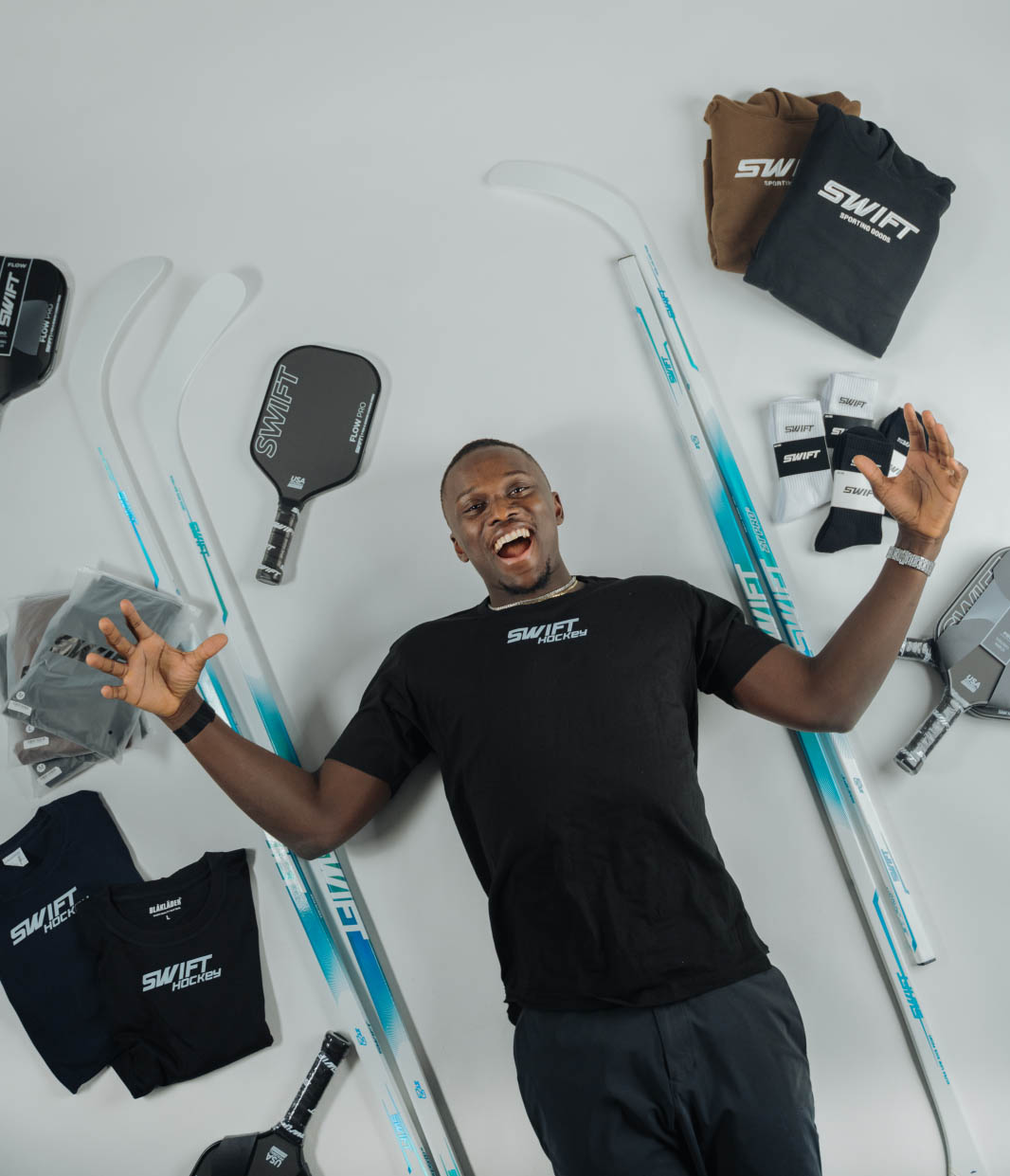
Can you walk us through your product development process? How do you ensure equipment meets elite standards while staying accessible?
It mirrors how players actually train: test, adjust and repeat. We prototype, get sticks into the hands of competitive players at every level, and fine-tune kick point, weight, balance, durability and feel based on real on-ice and on-field feedback. We iterate over months, not marketing cycles. By the time a product launches, it’s been through more honest critique than most brands ever expose their equipment to.
Accessibility is a major theme in your work. What systemic issues in youth sports do you think Canada still needs to address?
Cost is the headline issue, but it’s connected to deeper problems: the price of ice time, the lack of equipment libraries in schools, the way travel hockey has become a financial gate and the underrepresentation of racialized kids in the talent pipeline. We need policy support, school-level investment and brands willing to take less off the top. Talent is everywhere in this country, but opportunity isn’t.
The $100,000 equipment donation initiative is significant. How did you decide where and how to distribute these resources?
We’re focusing on communities that have historically been overlooked: racialized neighbourhoods, Indigenous communities and grassroots programs doing the work without major-brand sponsorship. We’re partnering with organizations on the ground that know which kids and programs need the equipment most. Our goal is zero waste and maximum reach, every dollar in product into the hands of a player who otherwise wouldn’t have it.
How do you measure the real-world impact of those community investments beyond just numbers?
We listen. We track retention: are kids who received Swift equipment still playing a season later? We hear from coaches about kids who finally feel like they belong on the bench. We see families return to the game after opting out. The number on the cheque matters, but the truest metric is the kid who suits up next year because of it.
Your partnership with Landon Hafele signals a focus on the next generation. What do you look for in athlete ambassadors?
Authenticity, work ethic and a real connection to where they came from. We don’t sign athletes for clout, we sign people whose stories align with ours. Landon represents the next generation: hungry, talented and willing to use his platform for good. Those are the partnerships that move both the brand and the game forward.
How important is storytelling and athlete identity in building a modern sports brand today?
It’s everything. Players, especially younger ones don’t just want equipment; they want to belong to something. The brands that will succeed this decade are the ones telling honest stories about access, identity and community. Swift was built on a story: a kid from Oshawa with Jamaican roots who refused to accept that sport had a price of admission. That’s the brand story.
What has been your biggest challenge as a young founder entering a traditionally legacy-driven sports equipment industry?
Being taken seriously. The hockey equipment world is dominated by players who’ve been around for decades and don’t always welcome a 23-year-old Black-owned brand showing up with a different model. Distribution, NHL recognition and retail relationships, every door took longer to open. But once the product spoke for itself, the conversation changed.
How are you leveraging innovation or technology to stay competitive against established global brands?
We use the direct-to-consumer relationship as a data engine. Every order, every review and every return tells us something we can act on. We move faster on materials, design tweaks and small-batch testing than the legacy players can. We’re also investing in next-generation composites and exploring how digital fitting and customization can become part of the future of buying sports equipment.
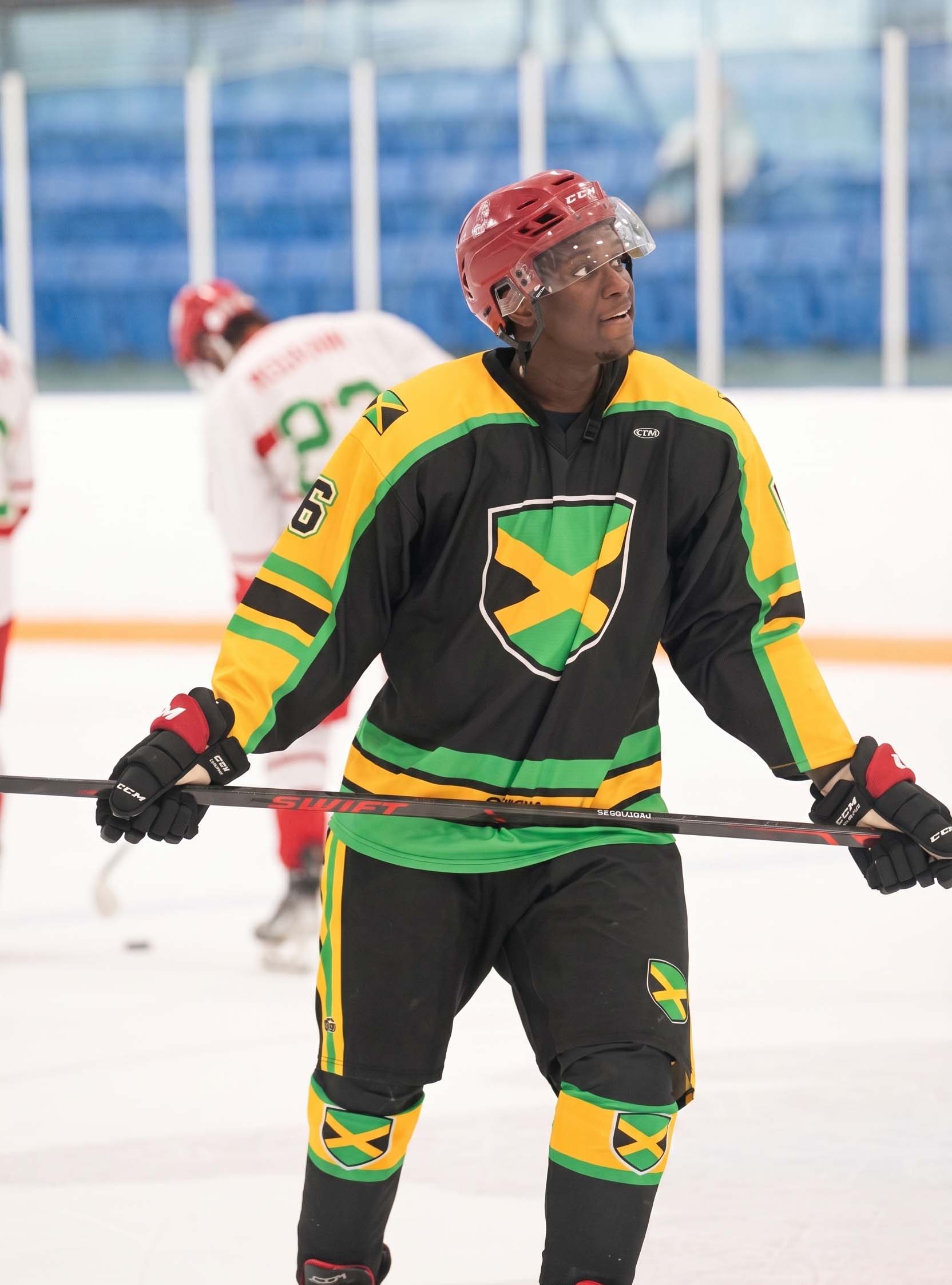
What feedback have you received from athletes that has fundamentally changed your products or approach?
Early on, competitive players told us our first kick point was too aggressive for finesse shooters. We rebuilt the lineup with more options. Professional players pushed us on durability against repeated slashes, so we re-engineered the layup. Even the smallest details like grip texture and blade pre-curve came directly from athlete feedback. For us, product innovation is always a conversation, not a monologue.
Canada has a deep hockey culture. How do you maintain authenticity in that space while expanding beyond it?
Hockey is the foundation. It’s where I came from, where the brand was built and where our most loyal community lives. Expanding into pickleball or lacrosse doesn’t dilute that it extends the same philosophy of access into adjacent communities. We protect authenticity by staying vocal about hockey, continuing to invest in grassroots programs and never treating the original sport like a stepping stone.
What advice would you give to young entrepreneurs, especially those from underrepresented communities, who want to break into the sports industry?
Build the thing only you can build. Your background isn’t a disadvantage; it’s the unique perspective that gives your brand its edge. Don’t wait for permission, don’t wait for perfect resources and don’t apologize for taking up space in rooms that didn’t expect you. Stay close to the people you’re serving and let the work be the loudest argument.
How do you define success at this stage: revenue growth, cultural impact or something else?
All three matter, but they’re not equal. Revenue keeps the lights on so we can continue doing the work. Cultural impact is the legacy. Real success, for me, is whether a kid in Oshawa, Scarborough or Halifax can pick up a stick ten years from now and feel like the game belongs to them. If we’re part of making that happen, the rest takes care of itself.
Your message to us at TorontoPages magazine.
Thank you for the platform and for telling stories that matter to this city. Toronto raised me as much as Oshawa did. The diversity, ambition and grit of the GTA are the energy Swift was built on. Keep championing the founders, athletes and communities that don’t always get the spotlight. The next generation is watching, and stories like the ones you tell remind them they’re allowed to dream big and build here.