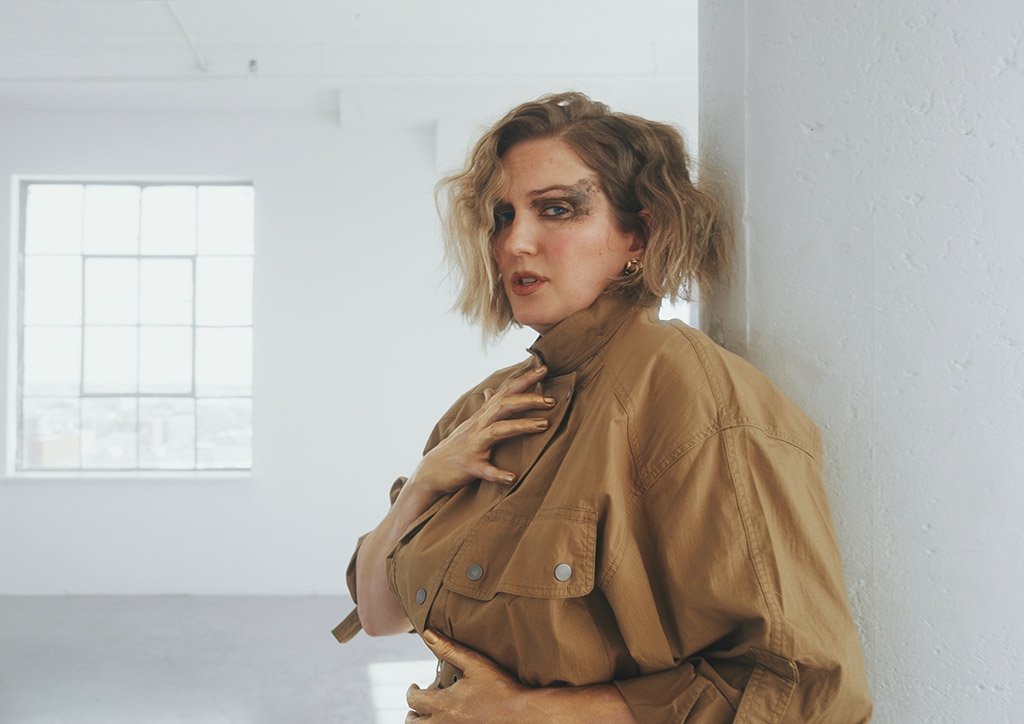
“A Dollar & A Suitcase” – A Story of Memory, Migration, and Maternal Love
With their deeply moving new single “A Dollar & A Suitcase,” Canadian Soul/Roots collective AV & The Inner City return with a song rooted in generational memory, migration, and the quiet, powerful bonds between mothers and daughters. Inspired by a true family story passed down through generations, the track traces emotional themes of departure, resilience, and love carried across distance and time.
The group is comprised of Laurelle K, Jenn Dahlen, Alenka Lundell, Crystal Eyo, Mira Angela, AV (Ann Vriend), and Stéphanie Odayen.
Ahead of their performance at the 2026 SING! Canadian A Cappella Championships at Koerner Hall in Toronto, the group opens up about their creative process, personal histories, and the lived experiences that shape their music.
With their deeply moving new single “A Dollar & A Suitcase,” Canadian Soul/Roots collective AV & The Inner City return with a song rooted in generational memory, migration, and the quiet, powerful bonds between mothers and daughters. Inspired by a true family story passed down through generations, the track traces emotional themes of departure, resilience, and love carried across distance and time.
Ahead of their performance at the 2026 SING! Canadian A Cappella Championships at Koerner Hall in Toronto, the group opens up about their creative process, personal histories, and the lived experiences that shape their music.
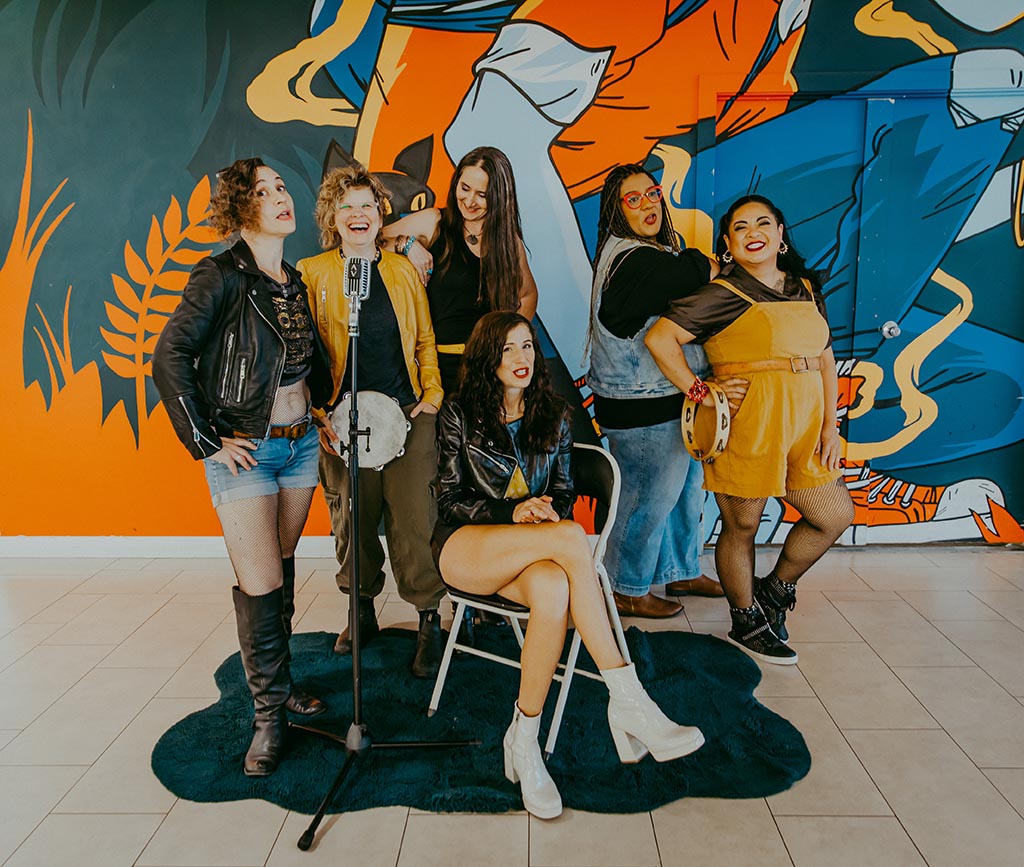
Congratulations on the release of “A Dollar & A Suitcase.” Can you tell us the real family story that inspired the song, and what it means to share it publicly now?
AV: Thank you! I wrote the song 17 years ago for my mom’s 60th birthday. It’s about a story she told us many times about her mother, our grandmother (Oma), who would say to her when she was leaving home: “If you don’t cry when you leave, I’ll give you a dollar.”
Even if my mom was brave at first, she would still cry eventually but later she would find a dollar bill in her jeans pocket, where my Oma had put it, knowing she would find it as she reached for a tissue to wipe her tears. It was my Oma’s way of being strong herself, but also of making sure she would be remembered and remain close to her daughter and later to us, her granddaughters, to whom my mom passed down that tradition.
If that tradition carries beyond our family, I’m sure my Oma and my mom would be immensely proud.
For me, the song has taken on much deeper meaning recently. On April 28, my parents were in a very serious car accident that almost killed them. They are both miraculously recovering, but for a while it was uncertain whether they would survive.
They were on a rural road trip celebrating my dad’s 80th birthday when they were struck from behind after pulling over on the side of the road to watch birds. Their car was hit so hard that the back was smashed into the front, and they were thrown into the dashboard.
They had a suitcase in the back that was completely destroyed and unrecoverable due to the severity of the accident. That made the imagery of the suitcase even more intense for me, and of course the thought that I might have to say goodbye to my mom for good, no more dollars in my pocket from her, only memories of the ones already given.
No one is ever ready for the final goodbye or the final trip, though we all must make them eventually. Many people have already had to face that. I feel extremely lucky that I am not there yet with my own mom, and still have a bit more time with her.
The single centres on immigration, motherhood, and saying goodbye. Why did this feel like the right story to tell ahead of Mother’s Day?
LK: I think it speaks very directly to the sacrifices that mothers make for their children, and how an experience as monumental as immigration often requiring separation for a time s deeply emotional for both mother and child.
The image of a mother holding back her emotions while encouraging her child to “be brave” in the face of something so daunting is really the perfect metaphor for motherhood in general.
The image of a mother slipping a dollar into her daughter’s pocket is so powerful. Why do you think small gestures can carry such deep emotional meaning?
MA: I think that moment carries so much emotional weight because it says everything without actually being spoken aloud. The mother comes from a generation where strength and emotional restraint were often how love was expressed. So when she says, “I’ll give you a dollar if you don’t cry,” it can sound playful or tough on the surface, but underneath it is a deep understanding that saying goodbye is going to hurt.
What really stays with me is that she slips the dollar into her daughter’s pocket before she even knows whether she will cry or not. That suggests the mother already knew her daughter would feel the weight of leaving home for the first time and perhaps she also knew she would cry too, even if she wouldn’t show it.
The dollar becomes less about a promise and more about a quiet act of love and preparation, almost like she wanted her daughter to discover that small piece of comfort exactly when she needed it most.
That’s why small gestures can carry such deep meaning. They’re often the moments where people reveal what they can’t say out loud. And for many people, especially in families where emotions weren’t openly expressed love shows up in actions like that. Quietly. Tenderly. In ways you only fully understand years later.
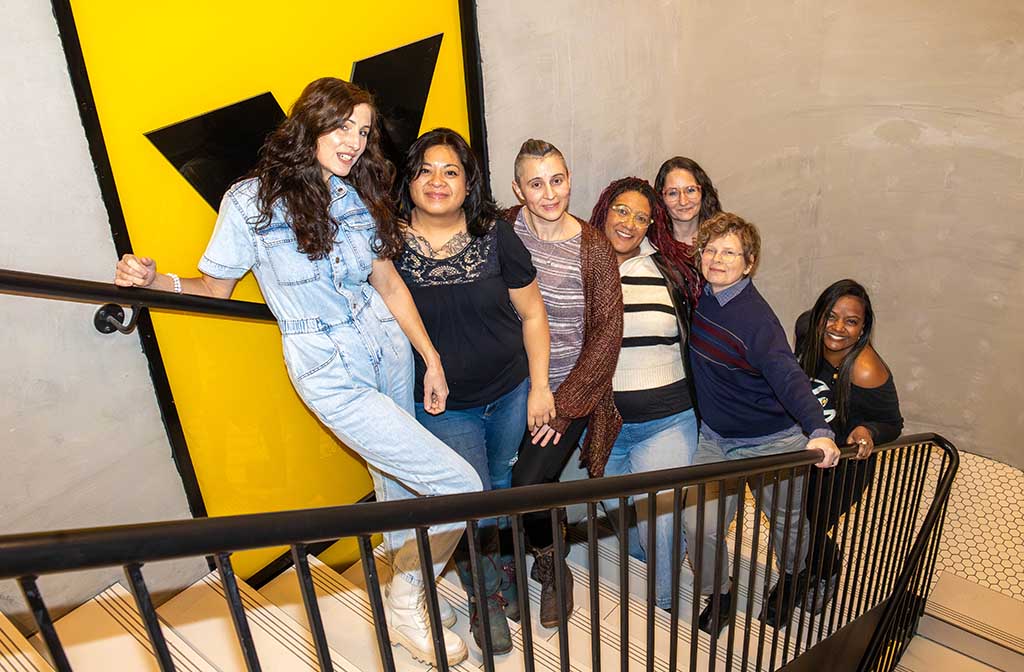
How much of the songwriting process for this track was emotional for you personally? Were there moments in the studio that really hit home?
AV: When I wrote this song 17 years ago as a birthday present for my mom, it basically poured out in the time it takes for the song to play. I cried the entire time I was writing it. I think I had been carrying it in my subconscious for a long time, and it was very cathartic to finally let it out.
When I brought it to AV & The Inner City, I knew it would be emotional again, but also very rewarding. We tried to sing it for my mom in rehearsal, and we barely made it through the first 1.5 lines before we all fell apart, mascara everywhere, honestly.
It wasn’t much better when she came into the studio during recording. And that was all before my parents’ car accident after that, everything became even more intense, especially for me. I’m grateful I managed to finish the mix right before it happened.
I remember taking my headphones off after approving the final mix and just crying from relief. Then I immediately remembered we still had to edit the music video, which I worked on while my parents were in the trauma unit. It was a very intense time.
AV, your grandmother’s journey from the Netherlands to Canada is at the heart of this song. What have you learned from her story about courage and sacrifice?
AV: My Oma went through WWI, the Great Depression, lost both her parents at a young age, and immigrated to Canada under the assumption she would never see her family again, all while raising seven children in ten years.
She had a reputation for not having much time or empathy for emotional expression or what she saw as “weakness,” and that definitely influenced me. I’ve often prided myself on being someone I thought she would be proud of in that regard.
But in recent years, I’ve realised her emotional toughness wasn’t really a choice, it was something people in her situation had to adopt to survive. What I’ve come to understand is that even people known for being tough are not just one thing.
The irony of releasing this song about resilience at the same time my own parents went through a serious accident is that I couldn’t always be my “strong” self. I had to lean on friends and colleagues more than usual, and I’m grateful they showed up for me so strongly.
What I’ve learned is that no one is a caricature. We are all much more complex than that.
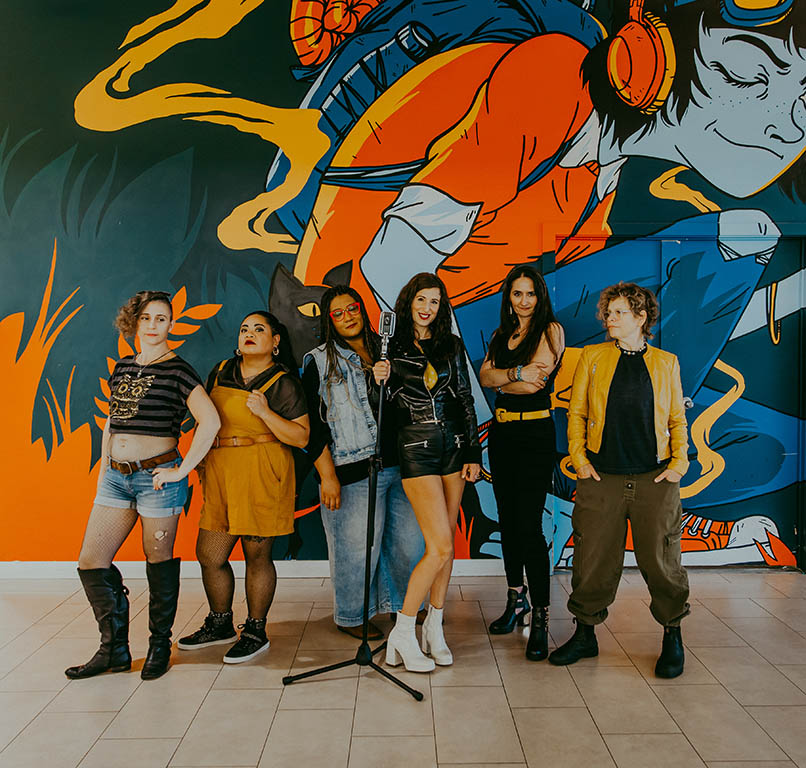
Canada is built on immigration stories. Do you hope listeners will hear their own family histories reflected in this song?
AL: Yes, that is something we really hope for. In today’s political climate, where immigrants are often scapegoated, it’s important to remember that behind the word “immigration” are individual human stories.
These stories speak of pain, heartbreak, hope, hard work, sacrifice, and love. If we can see immigration as a collection of personal stories, we may be able to understand each other better and get along more easily
AV & The Inner City bring together women from many different backgrounds. How does that diversity shape the way you create music together?
JD: I feel our diversity adds so much to the group. We are all very different, but we’ve grown to be more open and vulnerable with each other by sharing our perspectives and being our authentic selves.
There is a strong sense of mutual respect and love that has developed over time, which allows us to feel safe, experience belonging, and build confidence both individually and as a group.
Your harmonies are such a defining part of your sound. How do you build those layered vocals as a group?
JD: Honestly, that’s AV! She brilliantly arranges the harmonies to achieve the sound she imagines. And she is an incredible teacher.
As the daughter of two teachers, she really does come by it naturally. Our rehearsals are both fun and educational.
During the early days of the pandemic, she met with me online once a week to teach me music theory. I explained my challenges with understanding it, and she found creative ways, using imagery, for example to help me understand it in a way that made sense.
Her teaching ability is a real superpower that has helped shape the sound we create both on stage and in the studio.
In just a few years, you’ve gone from a local collaboration to one of Canada’s most talked-about new Soul/Roots acts. Has the journey surprised you?
CE: It’s definitely been a journey! As artists, you never really know when something is going to connect with people. Sometimes it does, sometimes it doesn’t. All you can do is put your best work out into the world and hope it resonates.
AV has been at this for a long time and is such an incredible songwriter, so I’m not surprised people are connecting with her work. More than anything, I feel really thankful for her dedication and persistence in building this group, and proud of the significant milestones we’ve reached as an all-female band.
There are so many incredibly talented women musicians in Canada who don’t always get the recognition they deserve, and I hope our success helps create more space for female representation in the industry.

Winning the Edmonton Folk Festival Emerging Artist Award was a major milestone. What did that recognition mean to the group?
LK: As a newer member of the group, I wasn’t part of the Folk Fest performance that led to the Emerging Artist Award, but it definitely added to the appeal of joining.
Knowing how far the group had come in such a short time to receive that recognition really spoke volumes about the talent and dedication involved.
Your debut EP reached #7 on the CKUA Top 30 and spent nine weeks on the Earshot charts. How validating was that response for an independent Canadian act?
LK: As a long-time CKUA listener and independent artist, charting in the Top 10 feels pretty amazing, and nine weeks on any chart is a massive accomplishment.
It’s very validating for me personally to be part of something receiving this kind of airplay and positive response. It’s also not surprising, as I was a fan of AV’s songwriting before joining the group and had heard her solo work on CKUA several times.
It just makes me feel even more grateful to be part of this incredible group.
You’ve received support from CBC, SiriusXM, and outlets across the country. Has national attention changed your perspective on what’s possible for the band?
CE: Absolutely. The phrase “the sky’s the limit” is really starting to feel true.
AV already has a strong presence in Europe as a solo artist and tours there multiple times a year. With A Dollar & A Suitcase now being promoted internationally as well, it feels like there is a lot of exciting potential ahead. We’re putting in the work and are excited to see where it all leads.
Your music explores resilience, displacement, joy, grief, and belonging. Why are those themes so central to your artistry?
LK: These themes naturally connect to the idea of the “inner city” and the lived experience of witnessing the struggles of displaced and unhoused communities on a regular basis.
Much of AV’s songwriting also comes from processing and bringing awareness to the growing needs of the community around her. On a broader level, these themes reflect life in general. They speak to the human experience, our shared struggles, and our universal desire for belonging.
Soul and Roots music often come from lived experience and truth-telling. How important is authenticity in everything you release?
AV: I think all good writing is a person telling their own truth, and all great writing is finding a way for that personal truth to be felt and understood universally.
This is very much at the heart of Soul and Roots traditions. In AV & The Inner City, our job is to stand in the tower of song, respect what came before us, and continue that tradition in our own unique way.
This can be challenging at times, especially as a diverse group with many influences shaping us. But that diversity is also very reflective of Canada itself. If you hear a wide range of influences in our sound, that should not be surprising, it may be the most Canadian thing about us.
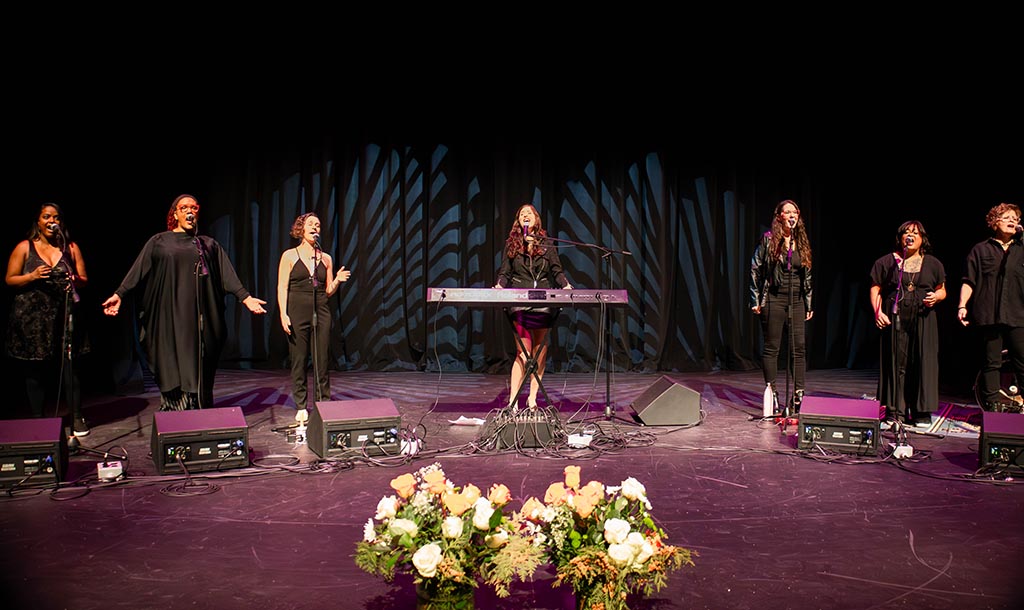
There’s a real sense of community in your performances. What do you hope audiences feel when they see AV & The Inner City live?
AL: Our group formed during the pandemic as a way to stay connected when the world was forced to disconnect. I believe that energy is still present in what we do. There is a strong connection between us, and it extends to our audiences.
I hope we help bring a sense of hope that friendship, community, and compassion are the way forward.
You’re performing at the 2026 SING! Canadian A Cappella Championships at Koerner Hall in Toronto. What can audiences expect from that show?
MA: I think audiences can expect something really heartfelt from AV & The Inner City at SING! this year. Yes, there will be big harmonies, AV’s powerful arrangements, and all the musicality that comes with an a cappella championship but at the core of what we do is human connection. We’re not just singing notes; we’re telling stories and sharing lived experiences through music. This feels especially meaningful given our group’s origin story from those COVID-era porch concerts in Edmonton’s inner city.
Our group comes from many different backgrounds, and I think you can hear that in the sound. There are influences of soul, gospel, folk, blues, and community singing woven throughout what we do. Some moments are very intimate and emotional, while others are uplifting and full of energy.
One thing people often say after our performances is that they felt something and that is always the goal. We want audiences to leave feeling moved, connected, and maybe even reminded of their own stories and the people who shaped them.
To do that on a stage like Koerner Hall, alongside some of the best vocal groups in North America, is incredibly exciting and a real honour. We are proud to represent Edmonton and bring our own spirit into that space.
As an all-female collective, do you feel you’re helping redefine space within the Canadian Roots and Soul scene?
LK: I’m not sure we ever think of ourselves as a big enough presence to redefine anything on that level, but it’s certainly a nice thought. I hope we continue to see more female-forward Roots and Soul groups emerging in the Canadian music scene and beyond, and it’s a privilege to play even a small part in that.
Each member brings a unique story and background. How do you balance individual voices while maintaining one unified sound?
LK: I think the magic of having one unified sound comes directly from that individual diversity. It’s the coming together of our different life experiences and choosing to walk this path together that creates unity.
Whatever our backgrounds or stories may be, we are choosing to share this journey and tell this story together and that is what makes it powerful.
AV’s songs carry messages of hope and resilience that are relatable to people wherever they are in their own journey, and I believe that is unifying in itself.
What have been some of the biggest challenges in building and sustaining a collective of this size?
AL: We all like to talk, usually all at the same time, which can sometimes make it difficult to stay focused during rehearsals. However, we’ve come up with a partial solution: we meet early and get the talking out of our systems first, and then we can rehearse.
For listeners discovering AV & The Inner City for the first time through this single, what do you hope they take away from your music?
MA: With the release of this single falling on Mother’s Day weekend, we hope it resonates with anyone who has had a mother or mother figure make sacrifices to support their family, sustain their way of life, or simply survive. That theme of sacrifice and resilience is deeply personal to all of us in AV & The Inner City.
Many of us come from immigrant families, and beyond that, so many people carry stories of loss, struggle, and perseverance across generations. This song holds that emotion from the very first four notes. Even during rehearsals, some of us could barely get through the opening lines without tearing up.
For listeners discovering AV & The Inner City through this single, I hope they take away a sense of authenticity and human connection. At the heart of our music is shared experience, deep emotion, and the understanding that the sacrifices made by those who came before us helped shape who we are today.
Finally, if your mothers, grandmothers, and the women who shaped you were listening to this interview today, what would you want to say to them?
JD: I would say thank you for your wisdom, strength, support, authenticity, sacrifices, bravery, encouragement, determination, radiance, and love. And thank you for believing in me. I am eternally grateful.
Your message for TorontoPages magazine.
LK: Thank you so much for your time and for these thoughtful, thought-provoking questions. We hope to see you at our performance at Koerner Hall for SING! Toronto on May 23, and we hope you enjoy the music.